How can universities help students navigate an increasingly complex information ecosystem?
In an era marked by misinformation, digital polarisation and declining trust in institutions, higher education faces a new challenge: preparing students not only to acquire knowledge, but also to critically interpret information, engage in democratic dialogue and understand the social dynamics shaping public debate.
This is the ambition behind CONSPIRE – CONSPIracism and RAdicalisation Risks in Europe, an Erasmus+ KA220-HED Cooperation Partnership in Higher Education coordinated by the University of Turin. The project brings together European universities and CESUE/Focus Europe to explore conspiracy theories and radicalisation risks through innovative educational methodologies that combine academic research with non-formal learning.
Rather than simply debunking fake news, CONSPIRE investigates how conspiracy narratives are produced, why they become persuasive, how they circulate across digital and social environments, and how education can help students and communities respond critically, democratically and constructively.
A European learning pathway for a complex information age
CONSPIRE focuses in particular on health-related conspiracy theories, a field that became especially visible during and after the COVID-19 pandemic. Narratives about vaccines, lockdowns, public health measures, scientific authorities and hidden powers have shown how misinformation can affect trust, social cohesion and democratic participation.
The project responds to this scenario by developing a structured European training pathway for university students in the social sciences. Its aim is to provide students with concepts, methods and tools to understand conspiracy theories, analyse the arguments used to support or challenge them, and recognise the radicalisation processes that may be connected to conspiracy thinking.
The project therefore addresses three closely connected needs: improving the ability to critically analyse health-related information; strengthening awareness of radicalisation risks; and promoting active citizenship, democratic participation and media literacy.
At the same time, CONSPIRE is not limited to knowledge transmission. It is designed as a competence-development pathway. Students are encouraged to strengthen critical thinking, digital citizenship, media literacy, collaborative learning, communication skills, fact-checking, intercultural dialogue and civic engagement.
A growing European partnership
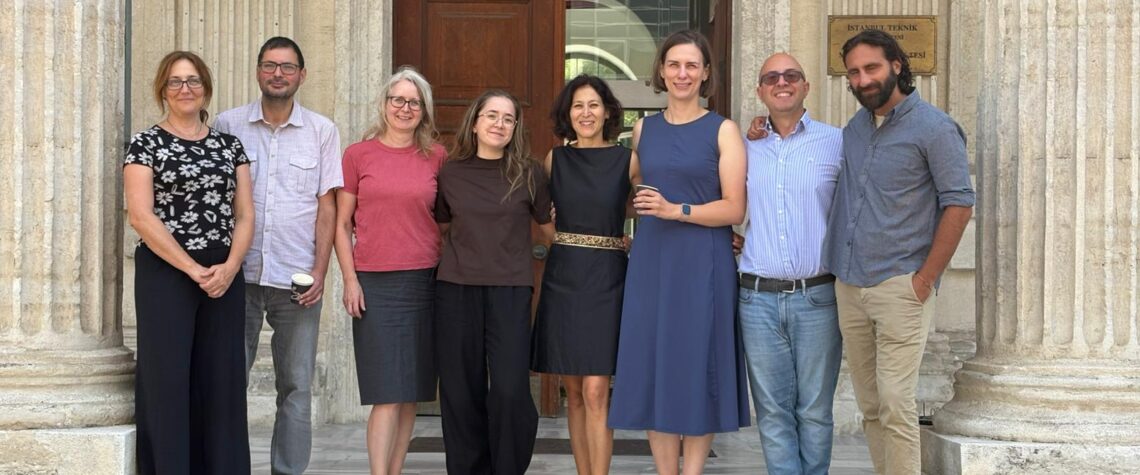
CONSPIRE is coordinated by the University of Turin and involves a transnational partnership composed of Istanbul Technical University, University of Tartu, Aalborg University, Universitat Autònoma de Barcelona, Universidad Complutense de Madrid and CESUE/Focus Europe as operational and media partner.
The project runs from 1 November 2024 to 31 October 2027, with a total Erasmus+ budget of €400,000.
Its target group is clear and measurable: 250 university students will be involved in the training programme, with 50 students from each participating country. A selected group of 25 students will then take part in an international mobility experience at the University of Turin.
This European dimension is central. CONSPIRE allows students and academics to compare national contexts, different public debates and diverse forms of conspiracy thinking, while developing shared tools to address a challenge that crosses borders.
Non-formal education inside formal university settings
One of the most distinctive features of CONSPIRE is its educational approach. The project brings non-formal education methods into formal higher education environments.
The university is not treated only as a place for lectures, exams and academic transmission. It becomes a laboratory for active learning, critical reflection, participatory storytelling, role-playing, community engagement and democratic debate.
The training programme includes six online educational modules delivered by academic teachers and professional practitioners. These modules are complemented by face-to-face workshops in partner universities, local activities with students, public engagement actions and a transnational mobility.
This combination reflects the spirit of Erasmus+: learning becomes stronger when students cooperate, compare perspectives, experience methods directly and connect knowledge with real social challenges.
In this sense, CONSPIRE can be understood as a form of challenge-based learning. Students work on a real and urgent European issue — the spread of conspiracy thinking and misinformation — and are invited to understand it, discuss it, simulate it, question it and communicate about it.
Learning by doing: the role of Conspirology
At the heart of the project is Conspirology, an educational role-playing game specifically designed for CONSPIRE.
Through this method, students do not simply study conspiracy theories from the outside. They enter a structured and supervised simulation that allows them to understand how conspiracy narratives are built, circulated, challenged and evaluated.
During the workshops, students work within fictional scenarios connected to health-related conspiracy issues. They are divided into three groups: “conspiracy theorists”, who build a conspiracy narrative; “debunkers”, who formulate criticisms and counter-arguments; and “judges”, who assess the arguments developed by the other groups.
This mechanism creates a safe educational environment. Students can explore the logic of conspiracy thinking without endorsing it. They learn how evidence may be selected or distorted, how emotions can be mobilised, how narratives become persuasive, and how critical reasoning can be used to resist manipulation.
The educational value lies precisely in this experiential dimension. Instead of telling students only what conspiracy theories are, CONSPIRE allows them to understand how they work.
“Play the Conspiracy” and “Replay the Conspiracy”
The role-playing process is structured in two main phases.
The first phase, “Play the Conspiracy”, takes place during face-to-face workshops in the partner universities. Each workshop combines relational meetings, narrative role-playing and tutoring support.
Students first collect material through relational meetings with members of civic society. They then use these insights, together with online information and classroom discussion, to build and analyse conspiracy narratives within the Conspirology game.
The second phase, “Replay the Conspiracy”, will take place during the international mobility at the University of Turin. Here, the selected students will work together to create a new overarching conspiracy narrative, bringing together the local narratives previously developed in the partner countries.
The mobility will therefore become a transnational learning experience, where students compare contexts, share methods and reflect on how conspiracy thinking changes across different cultural and social environments.
Community organising: connecting universities and civic society
CONSPIRE does not keep learning inside the university. One of its most important elements is the use of community organising as an educational and civic method.
Students are encouraged to interact with citizens and local communities in order to collect opinions, concerns and representations related to health-related conspiracy theories. This allows them to understand that disinformation is not only a digital issue, but also a social one.
Conspiracy narratives circulate through relationships, fears, identities, mistrust and everyday conversations. For this reason, the project links academic reflection with civic engagement.
By meeting communities and bringing social perceptions back into the classroom, students learn to connect research with public life. They are trained not only as learners, but also as active citizens capable of listening, analysing and participating in democratic debate.
Conspiracy Pills: professional voices in the learning process
Another important feature of CONSPIRE is the integration of short professional contributions, the so-called Conspiracy Pills.
These contributions involve not only academics, but also practitioners such as journalists, scientists, activists, religious leaders and other public voices. Their role is to enrich the learning process with professional experience and real-world perspectives.
This is a key example of how non-formal education can strengthen formal higher education. Students encounter different languages, roles and responsibilities. They learn that countering disinformation requires academic knowledge, but also communication skills, ethical awareness, media literacy and the ability to speak to wider audiences.
In this sense, CONSPIRE also prepares students for emerging professional and civic roles linked to fact-checking, media analysis, public communication and democratic resilience.
ConTrust: using documentary language to communicate learning
The audiovisual dimension is another central component of CONSPIRE. During the mobility and the role-playing process, the project will produce ConTrust, a documentary designed to communicate the most significant phases of the educational experience.
The documentary will show how students construct conspiracy narratives, how they challenge them, and how critical arguments are developed through the game. Its purpose is not only to document the project internally, but also to make the learning process visible to a wider audience.
Together with video pills, multimedia materials and a multilingual video spot, ConTrust will help disseminate CONSPIRE beyond academic circles. It will bring the project’s educational approach to students, educators, media professionals, civil society organisations and citizens.
Inclusion, diversity and democratic participation
CONSPIRE also reflects Erasmus+ priorities on inclusion and diversity. The project is designed to promote equal opportunities, accessibility and fair participation across all its actions.
The involvement of students with fewer opportunities, students with disabilities and non-binary identities is explicitly considered in the participation process. This inclusive approach is important because democratic resilience cannot be built without pluralism and access.
The project’s educational model is therefore not only about developing critical thinking. It is also about creating learning spaces where different students can participate, cooperate and contribute to a shared European reflection on misinformation, trust and democracy.
A laboratory for democratic resilience
CONSPIRE is more than a project on conspiracy theories. It is an experiment in how European universities can evolve.
By integrating academic excellence with non-formal education, role-playing, community organising, audiovisual storytelling and international cooperation, the project reimagines the university as a space where students do not simply learn about society — they actively engage with it.
In doing so, CONSPIRE demonstrates how Erasmus+ can transform higher education into a laboratory for democratic resilience, critical thinking and active European citizenship.
In a Europe shaped by digital transformation, health crises, polarisation and rapidly changing information ecosystems, this kind of education is not optional. It is part of the democratic mission of universities.
CONSPIRE starts from this idea: to counter disinformation and radicalisation, Europe needs research, education, participation and public communication. Above all, it needs learning environments where young people can become more critical, more aware and more engaged citizens.