In an increasingly interconnected digital environment, the spread of conspiracy theories, fake news and misleading information represents one of the most significant challenges facing contemporary journalism and democratic societies. Social media platforms have transformed the ways citizens access and consume news, creating unprecedented opportunities for communication while simultaneously accelerating the circulation of unverified claims, manipulated content and politically motivated narratives. As artificial intelligence introduces new forms of sophisticated disinformation, the ability to distinguish reliable sources from misleading information has become more important than ever.
How can readers recognise conspiracy theories and fake news in an information landscape dominated by social media and algorithm-driven content? What challenges do journalists face when verifying information under the pressure of an increasingly rapid news cycle? And can media literacy provide an effective long-term response to disinformation, or are stronger technological and regulatory interventions also necessary?
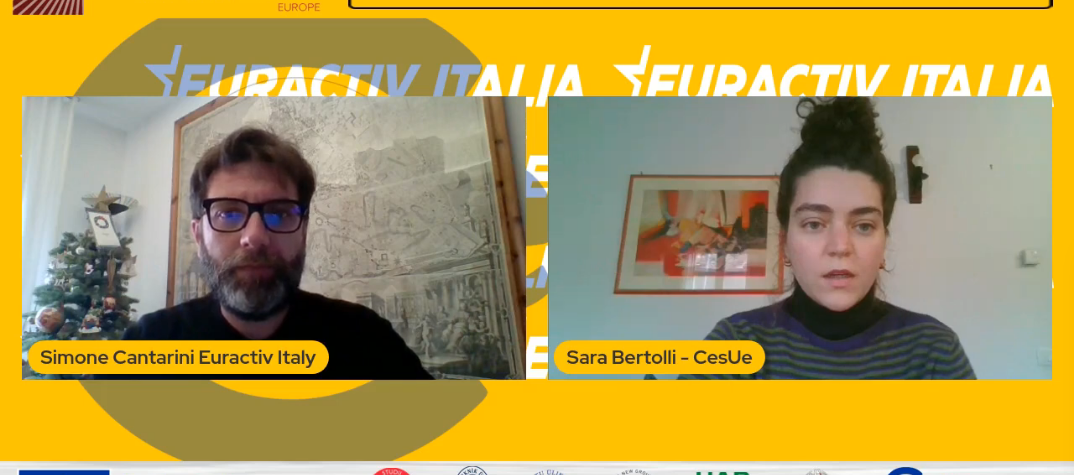
These questions are explored in an interview with Simone Cantarini, Editor-in-Chief of Euractiv Italy/Focus Europe and journalist with more than twenty years of professional experience covering European affairs, politics and international developments, conducted by Sara Bertolli, journalist at Focus Europe Italia, within the framework of the European project CONSPIRE – CONSPIracism and RAdicalisation Risks in Europe.
Funded by the Erasmus+ programme and coordinated by the University of Turin, CONSPIRE brings together European universities and CESUE/Focus Europe to investigate conspiracy theories and radicalisation risks while developing innovative educational approaches to strengthen critical thinking, media literacy and democratic participation. Running from 2024 to 2027, the project combines academic research, non-formal education, participatory workshops and community engagement. This interview is part of the Conspiracy Pills, a series of contributions from academics, journalists and professionals designed to help students and wider audiences understand the mechanisms through which misinformation spreads and influences public opinion.
Drawing on his extensive journalistic experience, Cantarini examines the growing difficulty of navigating an information ecosystem in which social media platforms have become primary news sources for many citizens, particularly younger generations. He emphasises that recognising reliable information requires an active and critical approach, encouraging readers to assess the credibility of their sources, consult established media outlets and follow qualified journalists and experts rather than relying exclusively on content selected by social media algorithms.
A central theme of the conversation is the responsibility of journalists in verifying information before publication. Cantarini highlights the importance of fact-checking tools, original documents, direct sources and professional verification practices. While online platforms provide valuable opportunities for accessing information, they also create significant risks when articles are produced by recycling unverified material or repeating claims circulating on social networks. In this context, tracing information back to its original source and contacting those directly involved become essential elements of responsible journalism.
The interview also explores the multiple origins of disinformation. According to Cantarini, misleading information does not emerge from a single political or geographical source: it can be spread unintentionally by ordinary users, amplified by influential public figures or deliberately circulated by actors seeking to manipulate public opinion. The increasing use of social media by political leaders adds further complexity, particularly when statements reach large audiences before being independently verified.
Particular attention is devoted to the European Union’s response to these challenges. Cantarini discusses the importance of regulatory and policy initiatives such as the Digital Services Act, the Code of Practice on Disinformation and the European Democracy Shield, highlighting the EU’s efforts to address the risks associated with online information manipulation and strengthen the resilience of democratic processes.
The conversation also examines the growing threat posed by artificial intelligence and deepfake technologies, which can generate highly realistic but misleading audio and video content. As these tools become increasingly sophisticated, traditional methods of recognising manipulated information may prove insufficient. Nevertheless, Cantarini argues that rigorous verification, responsible journalism and stronger media literacy remain indispensable instruments for confronting these emerging risks.
Ultimately, the interview reinforces the idea that countering disinformation requires a combination of professional journalistic standards, appropriate regulatory frameworks and citizens equipped with the critical skills necessary to evaluate information independently. Technological solutions alone cannot replace the responsibility of journalists and readers to question sources, verify claims and resist the pressure of immediate reactions.
In line with the objectives of CONSPIRE, Cantarini’s reflections offer a valuable perspective on the relationship between journalism, conspiracy theories and democratic resilience. By examining the challenges of information verification, the influence of digital platforms and the evolving European response to disinformation, the interview highlights the essential role of media literacy and critical thinking in protecting informed public debate and strengthening democratic participation across Europe.