In an increasingly fragmented and polarised information environment, conspiracy theories and fake news have become powerful forces shaping public opinion, influencing political debates and undermining trust in science, journalism and democratic institutions. From vaccine misinformation and climate change denial to historical revisionism and increasingly elaborate conspiracy narratives, misleading information spreads at unprecedented speed, amplified by social media algorithms and an online culture that often rewards emotional reactions over factual accuracy.
Why have conspiracy theories become so widespread, and what makes them so appealing? How do psychological needs, technological developments and declining institutional trust contribute to their success? And, most importantly, how can individuals develop the critical skills needed to distinguish reliable information from manipulation in a digital environment increasingly dominated by polarisation, artificial intelligence and sensationalism?
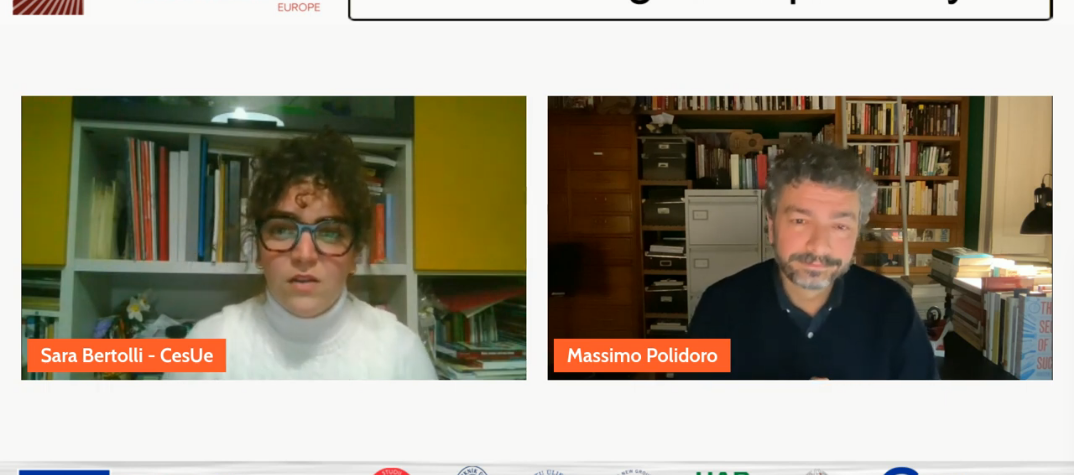
These questions are explored in an interview with Massimo Polidoro, Italian journalist, writer and science communicator known for his work on critical thinking, scientific scepticism and the investigation of conspiracy theories, conducted by Sara Bertolli, journalist at Focus Europe Italia, within the framework of the European project CONSPIRE – CONSPIracism and RAdicalisation Risks in Europe.
Funded by the Erasmus+ programme and coordinated by the University of Turin, CONSPIRE brings together European universities and CESUE/Focus Europe to investigate conspiracy theories and radicalisation risks while developing innovative educational approaches to strengthen critical thinking, media literacy and democratic participation. Running from 2024 to 2027, the project combines academic research, non-formal education, participatory workshops and community engagement. This interview is part of the Conspiracy Pills, a series of contributions from academics, journalists and professionals designed to provide students and wider audiences with practical tools for understanding and responding to misinformation.
Drawing on his extensive experience in science communication and his work exploring the mechanisms of conspiratorial thinking, Polidoro explains why conspiracy theories continue to attract followers despite the availability of scientific evidence. Rather than attributing their popularity to a sudden increase in irrationality, he identifies three interconnected factors: fundamental psychological needs for certainty, meaning and belonging; digital platforms that amplify emotionally engaging content; and the progressive erosion of trust in institutions, science and traditional media.
Particular attention is devoted to the changing digital landscape, where phenomena such as rage bait, AI-generated low-quality content and the crisis of authenticity contribute to an increasingly confusing information ecosystem. According to Polidoro, countering these challenges requires more than simply correcting false claims. It demands a cultural shift towards slower, more reflective information consumption, greater awareness of how scientific knowledge is produced and a stronger commitment to media literacy as an essential democratic competence.
The conversation also addresses a particularly complex challenge: what happens when misinformation originates from political leaders or institutions traditionally considered authoritative? In such circumstances, Polidoro emphasises the importance of evaluating multiple sources, understanding scientific consensus and recognising the emotional mechanisms through which information can be used to manipulate public perceptions.
Beyond examining the spread of false narratives, the interview explores the responsibilities of journalists and science communicators when reporting on conspiracy theories. Polidoro highlights the risk of unintentionally amplifying misleading claims and argues that effective communication should focus less on repeating sensational stories and more on explaining the mechanisms that make them persuasive. Understanding how misinformation works, rather than merely memorising individual corrections, can help audiences recognise similar patterns in the future.
Ultimately, the interview reinforces a fundamental principle: the most effective response to disinformation is not simply to provide more facts, but to cultivate better thinkers, more attentive listeners and citizens capable of questioning information critically. Intellectual humility, patience, curiosity and an understanding of scientific methods become essential tools for navigating uncertainty without falling into the traps of conspiratorial thinking.
In line with the objectives of CONSPIRE, Polidoro’s reflections highlight the central role of education and science communication in strengthening democratic resilience. By encouraging individuals to examine how knowledge is constructed, how narratives influence emotions and how reliable evidence can be distinguished from manipulation, the interview offers a valuable contribution to a broader European effort to promote critical thinking, informed citizenship and a more responsible public debate.