Through its Greek organisation Athinaiki Agora for Democracy and Culture, the Democracy & Culture Foundation brings its international expertise in citizens’ assemblies and democratic innovation to the Erasmus+ Teaching Environmental Democracy project. Under the methodological leadership of Dr Anthony Kefalas, Vice-Chair of the Foundation, the Greek partner is helping design an educational model that enables students to experience democracy through participation, deliberation and collective decision-making.
From Democratic Principles to Democratic Practice
How can democratic participation become a meaningful educational experience? And how can students acquire the skills needed to deliberate, negotiate and make collective decisions on complex environmental challenges?
These questions are central to the contribution of the Democracy & Culture Foundation (DCF) to T.E.D. – Teaching Environmental Democracy, an Erasmus+ Cooperation Partnership in Higher Education coordinated by the Université Catholique de Lyon (UCLy), France.
Through its Greek organisation, Athinaiki Agora for Democracy and Culture (DEMO), the Foundation leads Work Package 2 – Designing TED’s Methodology, one of the project’s core components.
The methodological activities are led by Dr Anthony Kefalas, Vice-Chair of the Democracy & Culture Foundation, economist, researcher and expert in economic policy and institutional governance.
His involvement is particularly significant for the project’s ambition to move beyond conventional university teaching and introduce practical experiences of democratic deliberation into environmental law education.
Working with the European consortium, Kefalas coordinates the development of a common methodological framework that will govern the T.E.D. training programme, including the design of the Students’ Assembly, an innovative educational instrument through which students will engage in structured democratic decision-making.
The challenge is not simply to introduce an additional teaching activity. It is to create a credible educational environment in which participants can experience the opportunities, responsibilities and tensions that characterise democracy in practice.
Democracy & Culture Foundation: Rethinking Democracy for Contemporary Challenges
The Democracy & Culture Foundation is an international organisation committed to strengthening democratic institutions, promoting civic engagement and developing innovative approaches to democratic governance.
Its activities respond to the growing challenges facing democratic systems, including declining public trust, social inequalities, technological transformation, climate change and the increasing complexity of public decision-making.
The Foundation promotes dialogue between academics, policymakers, civil society organisations, businesses and citizens, combining research and international debate with practical experimentation.
Its institutional approach is reflected in the philosophy “Think, Talk, Do”, which connects intellectual reflection with public dialogue and concrete action.
Among its best-known initiatives is the Athens Democracy Forum, organised annually in association with The New York Times.
The Forum provides an international platform for political leaders, researchers, civic innovators, journalists and representatives of civil society to discuss the state of democracy and explore possible responses to contemporary challenges.
The Foundation also organises Art for Tomorrow, an international initiative examining the relationship between culture, creativity, politics and social transformation.
Through these activities, DCF has developed an extensive international network connecting democratic research, civic participation and policy-oriented initiatives.
This experience provides a valuable foundation for its participation in T.E.D., particularly in developing methods through which students can move from studying democratic institutions to actively engaging in democratic processes.
Anthony Kefalas: Bringing Economic Analysis and Institutional Experience to Democratic Innovation
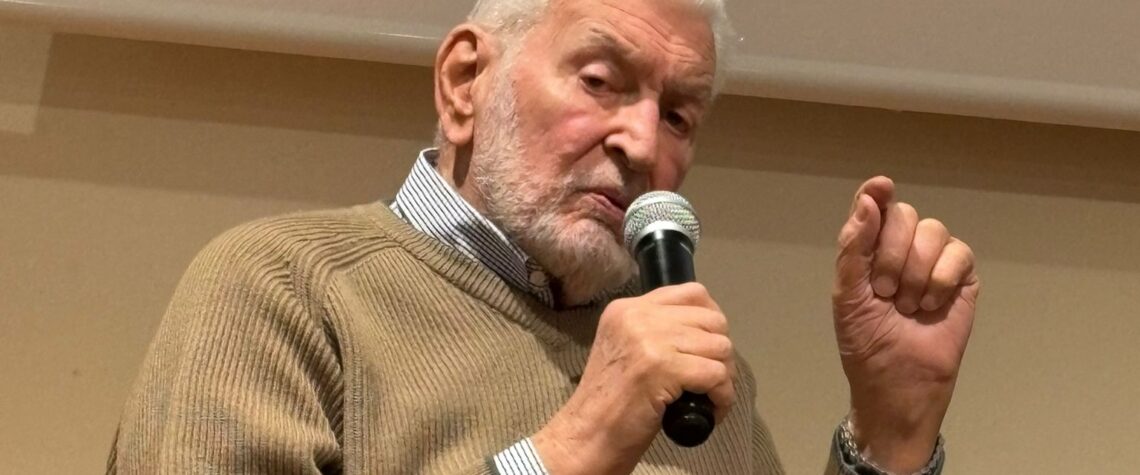
A central figure in the Foundation’s contribution to T.E.D. is Dr Anthony Kefalas, Vice-Chair of the Democracy & Culture Foundation and leader of the project’s methodological work package.
Educated in the United Kingdom and the United States, including at the London School of Economics and Washington State University, Kefalas holds a doctorate in economics and has developed an extensive career spanning academic research, economic policy, institutional advisory work and strategic management.
His professional experience includes serving as a senior researcher at the Centre of Planning and Economic Research (KEPE) in Greece, advising government ministers and public institutions, and providing economic and strategic advice to major organisations and businesses.
He has also taught economics at institutions in the United Kingdom, the United States and Greece, combining academic analysis with practical experience in public and private-sector decision-making.
A prolific commentator on economic and institutional issues, Kefalas has published extensively in Greek and international media and is the author of several books addressing economic development and industrial policy.
This multidisciplinary background is particularly relevant to the challenges addressed by T.E.D.
Environmental governance often involves difficult choices between economic development, ecological sustainability, public interests and democratic legitimacy.
Understanding these tensions requires not only legal and scientific knowledge, but also an appreciation of how institutions operate, how competing interests influence decisions and how collective choices can be organised.
Kefalas brings this perspective to the methodological development of T.E.D., connecting the practical organisation of democratic processes with the wider questions of governance, institutional effectiveness and collective responsibility.
His role is therefore not limited to the technical coordination of a work package. Within the framework established by the consortium, he helps guide the process through which different academic and institutional approaches are translated into a common model of participatory education.
From Building Blocks for Democracy to European Citizens’ Assemblies
Kefalas’s involvement in T.E.D. builds on the Democracy & Culture Foundation’s wider experience in deliberative democracy and civic innovation.
A particularly relevant initiative is Re-imagining the Building Blocks of Democracy, developed by DCF to explore how democratic systems can become more resilient and responsive to contemporary societal challenges.
The initiative has promoted international discussions and participatory processes examining fundamental questions concerning democratic institutions, political representation, citizens’ participation and the relationship between public authorities and society.
Rather than relying exclusively on expert-led analysis, the project has explored the value of involving citizens directly in identifying institutional challenges and developing recommendations.
Kefalas has played a visible role in presenting and discussing this initiative internationally, including at the Council of Europe’s World Forum for Democracy, where the project was featured as an example of citizen engagement and democratic innovation.
His involvement reflects an interest in connecting analytical approaches to governance with participatory methods that enable citizens to contribute to institutional reform.
The Foundation’s wider activities also include Democratic Odyssey, a European initiative exploring the possibility of establishing a permanent citizens’ assembly at European level.
Through transnational deliberative processes, the initiative seeks to create new opportunities for citizens from different countries to discuss common challenges and contribute to European democratic life.
Another relevant experience is ORBIS, a Horizon Europe research and innovation project exploring how digital technologies and artificial intelligence can support large-scale deliberative participation.
These initiatives share an important objective: developing institutional and methodological tools that make democratic participation more inclusive, structured and effective.
Within T.E.D., this experience is adapted to the specific needs of higher education, where the objective is not to reproduce political institutions in their entirety, but to create meaningful learning experiences through democratic deliberation.
Anthony Kefalas’s Leadership in Designing the T.E.D. Methodology
The methodological leadership of Anthony Kefalas is one of the defining elements of the Greek partner’s role in T.E.D.
As WP2 Leader and a member of the project’s Steering Committee, Kefalas coordinates the process through which the consortium develops the common rules and educational arrangements underpinning the training programme.
His responsibility involves working closely with the academic partners to address a series of complex questions.
How can different national university systems cooperate within a single educational programme? How should student mobility, assessment and academic recognition be organised? What procedures can guarantee that the Students’ Assembly operates according to transparent and inclusive democratic principles?
These are not merely administrative issues.
They concern the ability of the partnership to establish an educational model that combines academic coherence with meaningful participation.
The methodological work coordinated by Kefalas covers three interconnected dimensions.
The first concerns the development of common arrangements for the T.E.D. training programme, including academic schedules, mobility procedures, assessment criteria and the conditions for mutual recognition of the joint certification.
The second focuses on the pedagogical framework, defining learning objectives, teaching methodologies and the criteria for selecting environmental cases that will form the basis of the students’ deliberative activities.
The third, and perhaps most distinctive, concerns the design of the Students’ Assembly.
This includes defining its organisational structure, participation rules, speaking procedures, moderation arrangements, voting mechanisms and the nature of the recommendations or resolutions that students may adopt.
Kefalas’s role is to coordinate these processes and facilitate the development of shared methodological solutions among the partner organisations.
This approach recognises that democratic education requires both participation and a clear institutional framework.
Inclusiveness, equality of opportunity and freedom of expression must coexist with procedures capable of supporting structured debate and meaningful collective decisions.
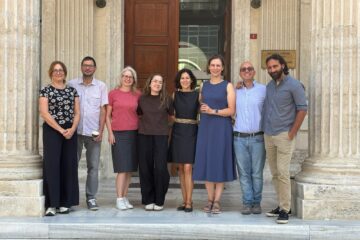
The first methodological meeting, chaired by Anthony Kefalas during the T.E.D. kick-off in Lecce on 16 March 2026, marked an important step in this process.
The meeting formally launched the collaborative work through which the consortium is developing the educational and organisational foundations of the programme.
The Students’ Assembly: Learning to Deliberate, Negotiate and Decide
At the heart of the T.E.D. methodology lies the Students’ Assembly, a deliberative educational experience designed to involve university students directly in discussions and collective decision-making on environmental issues.
Under the methodological leadership of DEMO, the consortium will establish a framework allowing students to examine concrete environmental cases, assess legal and scientific evidence, consider competing interests and formulate collective recommendations.
The educational value of the assembly lies not only in the decisions it produces, but also in the process through which those decisions are reached.
Participants will be encouraged to develop essential democratic competences, including critical thinking, active listening, negotiation, evidence-based argumentation and the ability to engage constructively with disagreement.
The design process will also involve student representatives, who are expected to contribute to defining the assembly’s rules and procedures.
This participatory approach reflects an important educational principle: students should not simply learn about democratic rules; they should also have an opportunity to contribute to their development.
For the Greek partner, the challenge is to adapt the principles of citizens’ assemblies and deliberative democracy to a university environment.
The methodology must therefore balance educational objectives with democratic authenticity, ensuring that students encounter the real complexities of participation while operating within an appropriate academic framework.
The experience accumulated by the Democracy & Culture Foundation, together with Kefalas’s background in institutional governance and policy analysis, provides a foundation for addressing these challenges.
Engaging Younger Generations: From Teens for Democracy to T.E.D.
The Foundation’s commitment to participatory education is also reflected in Teens for Democracy, an initiative designed to strengthen democratic awareness and civic engagement among younger generations.
Through workshops, discussions and activities connected to the Athens Democracy Forum, the programme encourages teenagers to engage with contemporary issues and formulate their own proposals.
Participants have addressed subjects including climate change, human rights, artificial intelligence and the influence of digital technologies on democratic societies.
The initiative provides opportunities for young people to exchange views with experts and policymakers while developing confidence in their ability to participate in public debate.
These experiences demonstrate how democratic competences can be strengthened through practical participation rather than exclusively through theoretical instruction.
For T.E.D., they provide useful examples of how participatory approaches can be adapted to different educational contexts.
By extending these principles to higher education, the project aims to develop a structured methodology in which legal knowledge, democratic participation and environmental responsibility reinforce one another.
Elina Makri: Supporting the Development of Participatory Methodologies
The Greek partner’s contribution also benefits from the expertise of Elina Makri, General Manager of Athinaiki Agora for Democracy and Culture.
With a background in law, journalism, international cooperation and communication, Makri has developed experience in projects connecting public information, institutional transparency and democratic participation.
Her professional career includes cross-border journalism and initiatives involving collaborative reporting, data analysis and civic engagement.
Within T.E.D., she supports Anthony Kefalas in the coordination of WP2, contributing to the design and functioning of the Students’ Assembly and the development of the project’s educational methodology.
Her expertise complements Kefalas’s work by bringing additional perspectives on communication, participatory processes and the practical conditions required for inclusive public debate.
Together, they contribute to the development of a methodology that aims to combine clear institutional procedures with meaningful opportunities for student participation.
Connecting Democratic Governance and Environmental Action
Environmental issues are particularly suitable for deliberative education because they frequently involve competing priorities, different forms of expertise and complex social consequences.
Climate change, energy transitions, biodiversity protection and the management of natural resources require decisions that balance environmental objectives with economic interests, territorial needs and democratic legitimacy.
The Democracy & Culture Foundation has addressed these challenges through initiatives such as the Climate Change Hub, developed in cooperation with the Hellenic Foundation for European and Foreign Policy (ELIAMEP) and Resilient Cities Catalyst.
The initiative promotes cooperation among public authorities, scientific institutions, local communities and civil society organisations to support climate resilience and the green transition in Greece and Southeast Europe.
This experience reinforces the relationship between environmental governance and democratic participation that lies at the heart of T.E.D.
The methodological work led by Kefalas will help translate these broader concerns into an educational setting, where students can examine how environmental decisions are discussed, negotiated and collectively formulated.
A European Partnership Built on Complementary Expertise
T.E.D. brings together four European organisations whose expertise contributes to different but interconnected dimensions of the project.
The Université Catholique de Lyon, France, coordinates the project and contributes its academic experience in European environmental law and international legal education.
The University of Salento, Italy, leads the development and implementation of the pilot training programme, drawing on its expertise in supranational democracy, fundamental rights and environmental law.
CesUE – Centre for European Union Studies, Italy, coordinates communication, dissemination and project outreach, supporting the wider visibility and transferability of the project’s outcomes.
Within this partnership, Athinaiki Agora for Democracy and Culture, under the methodological leadership of Anthony Kefalas, is responsible for establishing the framework that connects academic learning with democratic practice.
The methodology developed through WP2 will provide the foundation for the pilot training planned for the 2027–2028 academic year, when students from the participating universities will experience the educational model through courses, mobility activities and deliberative assemblies.
The long-term objective is to create a sustainable training programme that can be integrated into university curricula and potentially adopted by other higher education institutions across Europe.
Preparing Students to Shape Democracy, Not Simply Study It
Environmental challenges increasingly require democratic institutions and citizens to make decisions under conditions of uncertainty, disagreement and competing interests.
Addressing these challenges requires more than technical expertise or knowledge of environmental legislation.
It also requires the ability to understand different perspectives, participate in structured deliberation and assume responsibility for collective choices.
This is the educational ambition behind T.E.D.
Through the contribution of the Democracy & Culture Foundation and the methodological leadership of Anthony Kefalas, the project draws on practical experience in democratic innovation to explore how these competences can be developed within higher education.
Kefalas’s background in economics, institutional governance and public policy adds a distinctive perspective to this process, highlighting the importance of designing democratic procedures that are both inclusive and capable of supporting effective decision-making.
By translating principles of deliberative democracy into a common educational methodology, the Greek partner is helping to establish the foundations for a European learning experience that combines environmental knowledge with democratic responsibility.
The contribution of Anthony Kefalas and the Democracy & Culture Foundation reflects one of T.E.D.’s central ambitions: to prepare students not only to understand democratic institutions and environmental challenges, but also to engage actively, critically and responsibly in the collective decisions that shape their future.
T.E.D. – Teaching Environmental Democracy is co-funded by the European Union under the Erasmus+ programme, Cooperation Partnerships in Higher Education (KA220-HED), 2025–2028.
Funded by the European Union. Views and opinions expressed are, however, those of the author(s) only and do not necessarily reflect those of the European Union or the European Education and Culture Executive Agency (EACEA). Neither the European Union nor EACEA can be held responsible for them.