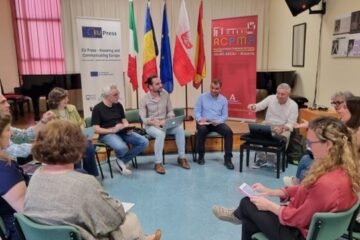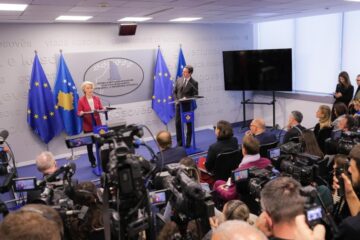
This is the concluding lesson of the macro topic, “Ventotene Manifesto,” in the first module of EUPress Teacher Training.
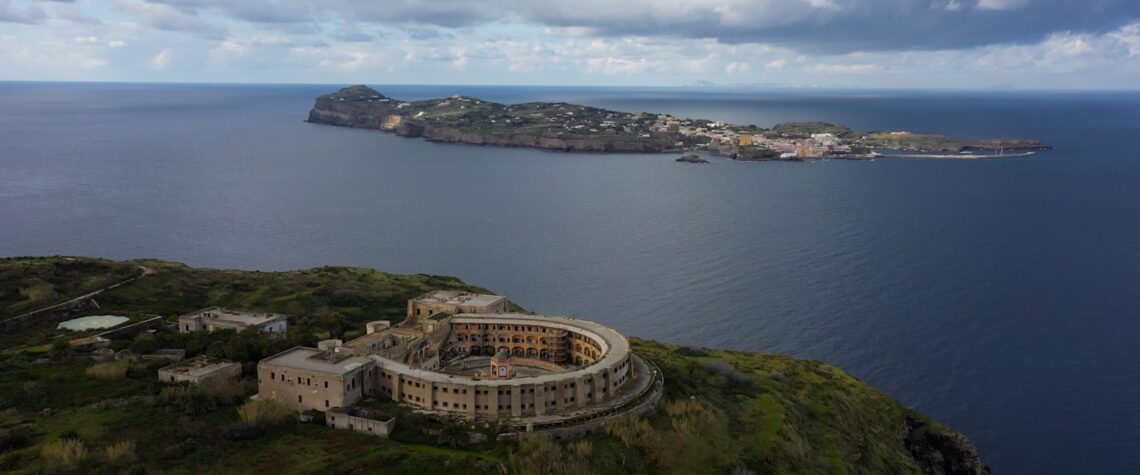
The objective of this lesson, led by Prof. Fabio Masini, is to discuss the Ventotene Integrated Project for the Rehabilitation of the Santo Stefano Prison.
The Ventotene Manifesto is often hailed as the intellectual cornerstone of European federalism — but its influence stems not just from its ideas, but from how those ideas were transformed into political action. Unlike earlier texts that speculated on post-war Europe, Ventotene served as a strategic blueprint that helped catalyse the earliest institutional steps toward what would become the European Union.
From island exile to political plan
Drafted in 1941 by Altiero Spinelli, Ernesto Rossi, and Eugenio Colorni while confined on the Italian island of Ventotene by the Fascist regime, the manifesto called for a radical break with nationalism in favour of a democratic, federal Europe.
Once freed in August 1943, the document’s authors — particularly Spinelli — wasted no time putting its vision into practice. That same month, they founded the European Federalist Movement (MFE) in Milan. Though initially a small and clandestine initiative, the movement became a rallying point for like-minded activists across the continent.
The post-war momentum: From Milan to The Hague
The end of World War II brought an opening for supranationalist ideas. In 1948, the Congress of Europe in The Hague gathered 750 participants from across the continent. There, federalist forces — including Spinelli — strengthened alliances and laid the conceptual foundations for greater political unity.
These early networks influenced figures like Jean Monnet and Robert Schuman, whose 1950 Declaration launched the European Coal and Steel Community — the first building block of European integration.
Spinelli vs Monnet: Two paths, one goal
While Spinelli and Monnet both sought a European federation, their methods diverged:
- Monnet advocated a functionalist, “small steps” approach: integrate sector by sector (starting with coal and steel), then expand.
- Spinelli pushed for an immediate and constitutional leap toward political federation, arguing that national interests would ultimately paralyse incremental moves.
History seems to vindicate Spinelli’s scepticism toward gradualism. After initial success, Monnet’s vision stalled when proposals for a European Defence Community and Energy Union were blocked in the 1950s.
A lasting benchmark, not yet achieved
Europe is still not a federation — at least not by Spinelli’s standards. Yet the Ventotene Manifesto remains a powerful benchmark. Its radical demand for political unification continues to inform debates on Europe’s future, and its authorship is a touchstone in the history of integration.
As European institutions evolve — and face new crises — Ventotene still functions as a mirror: a reminder of a bolder, urgent vision of unity that has yet to be fully realised.