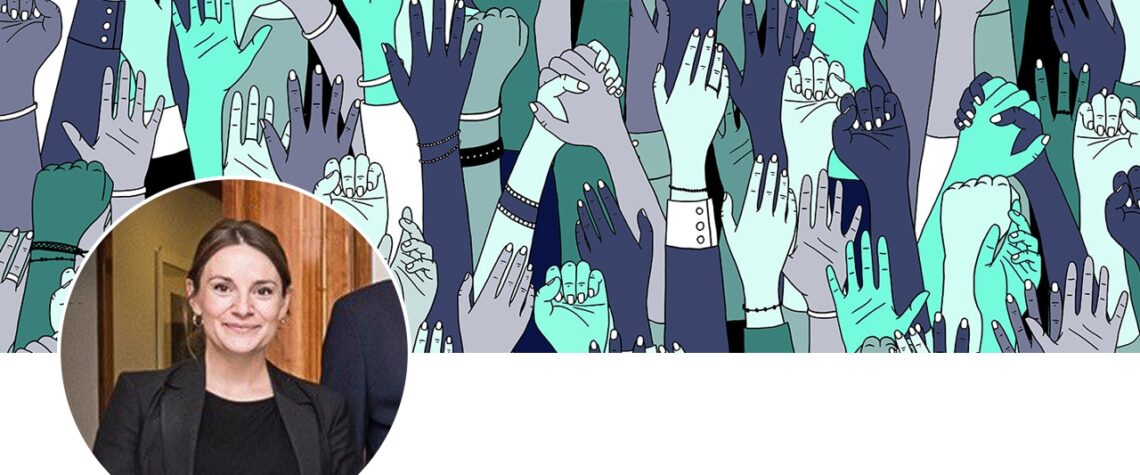
Fabio Masini, Managing Editor of Euractiv Italy, interviewed Emily Wigens, EU Director for The ONE Campaign, who is working to push for more investments to create economic opportunities and healthier lives in Africa. She is also very experienced in G7 and G20 legislative processes and meetings.
Fabio Masini
Emily, thanks for being here. I would like to ask first what your assessment of the results of the recent G7 is and what is your concern about the next G7 steps for Africa.
Emily Wigens
Thanks so much for having me. I think this G7 leaders meeting was a big, missed opportunity from the G7 and from the EU leadership to show real ambition and agree new commitments to supporting African Partners. It was all talk and no action. We saw really limited progress compared to the previous meeting of the finance ministers, so for me the summit in Apulia felt more like pointless PR platitudes rather than the beginning of something that would catalyze real action.
The increased promise of partnership between the G7 and the African continent included over 60 references to Africa in the communique after the summit; and despite all of that, there were very few specifics on what new financing, if any, was going to be made available to underpin these commitments.
Maybe it’s helpful to look at health as a particular example. In the case of health the leaders used the summit to call for continued commitment to local vaccine manufacturing efforts and said that they look forward to the replenishment of global health initiatives like Gavi, the Vaccine Alliance, which has immunized one billion children over the past 20 years and has ambitious plans to reach the next billion children in half that time, but these are two things, two efforts that need serious, significant funding. And the leaders came to the summit empty-handed on both these issues.
At ONE yesterday we published some new analysis showing that 98.9% of Africa’s vaccine supply is produced outside of the continent, obviously then leaving Africans particularly vulnerable to things like supply chain disruption or even vaccine nationalism which is something that we saw very starkly during the COVID pandemic. It’s in response to this that African leaders have prioritized vaccine sovereignty setting themselves a target to produce 60% of the continent’s vaccine needs in Africa by 2040. But our analysis shows that to meet that target means producing 73 times more doses that are currently produced on the continent today: it’s a Herculean effort but absolutely vital for the health of future generations.
Did G7 leaders take any steps to move this agenda forward? No; we didn’t see that in Apulia.
Fabio Masini
just to make things clear to our audience, you just published a Report in which you underlined that the data concerning resources that are going from the EU to Africa have declined constantly in the last 50 years, which is at odds with the increasing requirement of that continent. There are still huge gaps in terms of not just GDP growth of welfare, quality and quantity of infrastructures, of health system, of social networks, etc. What is your explanation for this decrease?
Emily Wigens
I think there’s a few things; let’s start with the analysis. Indeed, we did some new analysis that we released ahead of the summit that shows that the G7’s share of official development assistance or aid going to Africa is at the lowest level in 50 years. The proportion of aid from the G7 collectively plus the EU institutions going to the continent was at its peak in 2006 around 46% of the G7’s collective aid budget but it’s now dropped to about 25.8%. If we look specifically at Italy’s share of aid to Africa this is even below that collective baseline: 22%. You asked what’s behind this… well it’s interesting to look at the fact that one fifth of donor countries are spending one fifth of their development assistance budgets at home in their own countries, investing that money in refugee costs. Again, to take Italy as an example, Italy spent more than a quarter of its aid budget on refugees in 2020 and if you look closely at the data, you can see how that impacts the proportion of assistance that goes to continents like Africa. So, one of the reasons behind it is that you spent time at home on domestic issues. The other thing that’s very worrying about this is that you can see very clearly that actually there’s a growing cost of debt service payments, which is rapidly starting to outpace the amount of money that’s available through aid investment in developing countries, so developing countries debt level has more than doubled since 2009 and the cost of servicing that debt has skyrocketed in recent years.
When the G7 and the EU say they’re prioritizing stronger Partnerships with Africa… well ONE’s research shows that their words simply don’t match up to their actions and you can see that very plainly the EU institutions, France, Germany, and the US have all announced aid cuts this year totaling nearly 9 billion dollars. We need the G7 needers to look forward, not inward.
Fabio Masini
Is there any replacement of these funds from other countries in the world, for example from China, Russia, Latin America or other regions? My personal feeling is that there is an increasing attention towards Africa and paradoxically Europe – and maybe also the United States – have lost their ability to keep contact with the African countries and to help them in concrete terms. Do you think there is a shifting of this flow of resource, or do you witness a general reduction in the flows to Africa?
Emily Wigens
What we’re seeing is there is a continued trend in terms of declining aid to the African continent and to least developed countries. But I think you’ve touched on an important point there, which is: African countries do find themselves with options today.
It’s not just the EU or the United States that are keen to work and partner with Africa on different global challenges. There have been high level forums and summits between African leaders with Japan, South Korea, Turkey, Russia and China so indeed I think the ability of Africa to shape global outcomes is only increasing.
Fabio Masini
There is another question which is central to the African problem: the role of international institutions. Until now we spoke only about countries or groups of countries that decide to give money to Africa; but we didn’t talk about the role of international institutions such the World Bank or the IMF. You know that since the issue of $650 billion SDRs in 2021 there has been an increasing debate about the use of SDRs for emerging countries or for low-income countries. I myself made a proposal suggesting pooling the SDRs allocated to the EU – €150 billions – channel them to a Multilateral Development Bank – the European Investment Bank – to collateralize them and raise €750 billions in the markets for a joint development project that I called Next Generation Africa. What do you think about using SDRs to channel resources to the African continent?
Emily Wigens
I think the Special Drawing Rights might be a good opportunity. European and wealthier countries don’t need them, so they might channel them via multilateral development banks. But this has run into several roadblocks, and I think that’s somewhere where the G7 can provide clear political guidance. We need to find ways to dismantle those barriers and that was again another missed opportunity that in the G7 they haven’t taken to date. But you’re right to point out that there are several ways in which the different kinds of multilateral Institutions can be used to unlock billions of billions of dollars in new financing for developing countries. Maybe I’ll touch on just three of them.
The first is reforming the Multilateral Development Banks, institutions like the World Bank, so that they can accelerate low interest lending and help countries invest in their infrastructure and people. The G7 countries are the largest shareholders of these institutions. So, what they say really matters and they can help drive progress that will see some of this additional funding unlocked at no cost to them
In addition to that there’s also increasing contributions to the World Bank’s International Development Association, which is the world’s largest concessional fund for sustainable development, and this is something that is a very clearly stated priority for African Partners. President Ruto of Kenya has asked leaders to increase the fund up to 12 billion dollars which would require a significant increase from donor countries in the G7; but again, we didn’t see any real concrete progress on this.
The third area in which the G7 can use the multilateral system and the financial architecture to unlock additional funding is by speeding up the debt relief efforts for countries who were caught in that kind of impossible choice of whether to pay down their debts or invest in their people. Action on this would help 3.3 billion people living in countries that currently spend more on the interest payments of their existing debt than they do on education or health, so that’s important, a vital step that we need to see progress on. Unfortunately, again, this is not something that really moved forward at the summit in Apulia
Fabio Masini
The problem of debt servicing is huge but there are another couple of questions that I would like to pose to you. The first is the role of private money; public money is crucial because otherwise there is no signal to bring in also private capital. The second is if you think that there should be an increasingly strategic view from the whole Africa as a region, as a continent, not just as single, fragmented countries. Discussing at the World level as a continent, as a pole in a multipolar order, would help both the region and the whole world.
What do you think about these two points: private funds and African need for increasing regionalization?
Emily Wigens
I think private funding is absolutely critical. There’s no way public money can frankly close the financing gap that is needed for the developing countries to achieve their climate and development goals, so that’s absolutely something that needs to be addressed.
My sense is that increasingly Africa is speaking with a united voice and that is having an influence. Their ability to respond collectively to the double standards that were at play during the covid-19 pandemic… we saw a very clear continent-wide rejection of vaccine nationalism. Also, in terms of the global response that would help countries in the economic aftershocks. So yes, I think I do see a louder and more influential voice from the continent in these processes
At the G20 what I hope is that we’ll see these International and multilateral forums be more responsive to the demands and interests of the African continent.
Fabio Masini
Thank you very much, it was a pleasure talking to you. We will all support your campaign.
HERE You can see the videointerview