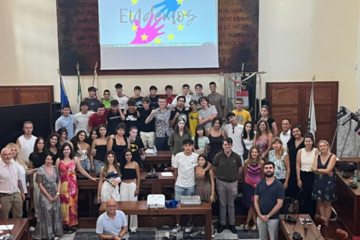
The EU Demos Summer School, organized in Brussels as part of the European project EU Demos, offered participants a chance to get a good grasp of how the European Union shapes everyone’s lives. The EU Demos project aims to promote democratic engagement and citizenship education across Europe. Through workshops, visits to EU institutions, and collaborative activities, participants deepen their understanding of the EU and develop tools to inspire young people in their own communities.
At the end of the experience, some questions were asked to the project coordinators from each school to understand the feelings about this experience. Among them, Effrosyni Sarafoúdi EU Demos coordinator at the 11th General Lyceum of Heraklion (Greece), shared one moment that felt particularly powerful: “Visiting the Hemicycle of the European Parliament was the most meaningful moment, as it made me realize the real impact of democratic dialogue and decision-making in the EU,” she explained.
When asked how her perception of the EU had changed after participating in EUdemos, Sarafoúdi offered a stimulating insight: “We now see the EU as more than just an institution—it feels closer, more human, and directly connected to our lives and values.” This shift highlights how the project attempts to bridge the gap between European institutions and citizens, especially younger generations.
Moreover, Sarafoúdi reflected on what being a European citizen means to her today:“It means belonging to a shared space of democracy, diversity, rights, and common responsibilities”. This sense of shared identity was strengthened during the Summer School, particularly through discussions on key EU-related topics such as climate change, migration, digital rights, and democratic participation – issues that resonate both in daily life and in education.
“The strong emphasis on youth participation in shaping Europe’s future truly stood out and inspired both students and educators”, she noted, emphasizing how the Summer School empowered participants to think critically about their role in Europe’s development.
Reflecting on the various activities, Sarafoúdi especially enjoyed the interactive visit to the Parlamentarium: “It made complex EU concepts accessible and engaging for everyone,” she said. She was also thankful because she was able to develop personal skills such as intercultural communication, adaptability, and collaboration – essential qualities for active citizens in an increasingly interconnected Europe.
Sarafoúdi believes that the EUdemos project could be even more impactful by including “more structured opportunities for dialogue between students from different countries and follow-up activities to extend the impact. When asked if she would choose to participate again in such a project, she responded: “Absolutely! I would love to contribute as a facilitator or coordinator, helping students engage critically and creatively with EU topics”.
[Edit By Luca Ottaviani]