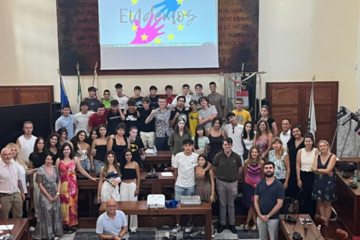
The European Union stands as a global symbol of cooperation, progress, and shared governance. As the world embraces technological innovation, one challenge emerges above all: Artificial Intelligence (AI). While AI holds great promise, it also raises serious concerns about privacy, employment, education, and ethics. Santiago Delgado, a young student and participant in the EUDEMOS Contest, outlines a compelling case for strong EU-level regulation of AI technologies, particularly from the perspective of youth.
What Is Artificial Intelligence and Why It Matters
Artificial Intelligence refers to the ability of machines to perform human-like tasks—such as decision-making, problem-solving, and speech recognition—by processing enormous amounts of data. While this may sound exciting and even revolutionary, Delgado argues that unregulated use of AI can become dangerous for individuals and society as a whole.
The Risks of Artificial Intelligence
1. Mental and Cognitive Impacts
One of the most serious risks is cognitive atrophy. Delgado points out that relying on AI tools for all intellectual tasks might cause people, especially young minds, to lose their critical thinking and problem-solving abilities.
2. Privacy and Consent
AI technologies are already being used to generate fake images and videos—sometimes of real people, including minors—without their consent. This poses a significant risk to personal dignity, safety, and social trust.
3. Employment and Economic Inequality
Many professions are already being automated. AI systems don’t need rest, salaries, or benefits, making them an appealing but dangerous alternative to human workers. Delgado warns that mass adoption of AI could lead to large-scale unemployment and deepen economic disparities.
4. Child Exposure and Development
Children are increasingly exposed to internet-connected devices and AI systems from an early age. Delgado stresses the need to protect the cognitive development of younger generations by limiting their exposure to smart devices.
A Call for EU-Wide Regulation on AI
To prevent long-term societal damage, the essay proposes several policy recommendations:
- Introduce a European lawto limit the misuse of AI.
- Ban AI from replacing humans in the job marketwhere it violates basic human rights.
- Restrict AI use by age, especially among young children.
- Ensure AI is used only by trained professionalsand for purposes that benefit the common good.
- Promote alternative, safer tools like traditional search engines for everyday information needs.
Why the EU Must Act Now
With 27 member states sharing sovereignty, the EU has both the authority and the moral responsibility to regulate AI across its borders. Delgado argues that a failure to act could mean sacrificing not only the integrity of the labor market but also the psychological and social health of future generations.
Conclusion: A Future Worth Protecting
Artificial Intelligence is not inherently bad—but without clear boundaries, it can become a threat to democracy, equality, and human dignity. Santiago Delgado’s vision is a call to action for the EU to lead by example and protect the rights and well-being of all its citizens, starting with the youngest.
“We need to act now. The limits we set today will shape the Europe of tomorrow”.
EUDEMOS-CONTEST-SANTIAGO-DELGADO-SANCHINARRO su The EU and Artificial Intelligence