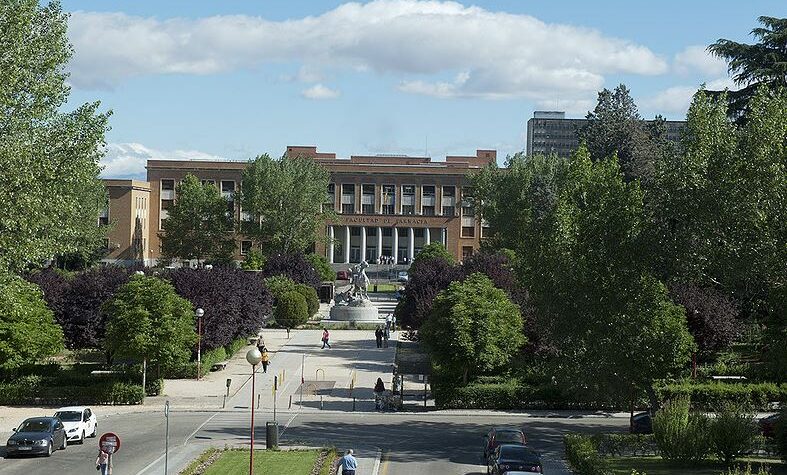
The Complutense University of Madrid (UCM) is the largest university in Spain and one of the oldest and most prestigious academic institutions in Europe.
With more than 60,000 students, a strong international community and a long tradition of excellence in research and education, UCM plays a leading role within the European Higher Education Area. Its academic profile combines historical depth, scientific excellence, social commitment and international cooperation.
The university offers a broad range of programmes across disciplines and is deeply involved in research, innovation, mobility and knowledge exchange. Its long-standing academic tradition and its capacity to connect research with society make UCM a valuable partner in European projects addressing complex contemporary challenges.
Within CONSPIRE – CONSPIracism and RAdicalisation Risks in Europe, UCM brings a strong sociocultural and anthropological perspective to the study of health-related conspiracy theories, misinformation, public trust and collective behaviour.
A major European university with a strong international profile
UCM has extensive experience in international cooperation and maintains partnerships with hundreds of institutions worldwide. It actively participates in Erasmus+, European research projects and international academic networks, supporting collaboration, mobility and knowledge exchange across borders.
This international outlook is particularly relevant for CONSPIRE. The project addresses a phenomenon that cannot be understood only at national level. Conspiracy theories, disinformation and radicalisation risks circulate across borders, languages, digital platforms and communities. They require a transnational educational and research response.
UCM’s participation strengthens the European dimension of the project and contributes to its capacity to compare different social, cultural and institutional contexts.
The Faculty of Political Science and Sociology
Within CONSPIRE, UCM is represented by researchers from the Faculty of Political Science and Sociology, whose expertise focuses on social change, public attitudes, health-related beliefs and the social dynamics that shape trust, misinformation and collective behaviour.
This disciplinary background is highly relevant to the project. Conspiracy theories are not only individual opinions or isolated false claims. They are social narratives that emerge within specific contexts, respond to forms of uncertainty or mistrust, and may become persuasive when they connect with personal experience, institutional criticism or feelings of vulnerability.
The UCM team helps CONSPIRE analyse these processes by combining sociological and anthropological approaches with attention to health, public policies, beliefs, social representations and stereotypes.
Anthropology, Diversity and Integration
The UCM contribution is connected to the research group Anthropology, Diversity and Integration, based at the Faculty of Political Science and Sociology and directed by Professor Maribel Blazquez-Rodriguez.
The group specialises in health and beliefs, diversity, public policies, social representations and stereotypes. Its research experience includes alternative therapies, new spiritualities and the complex relationships between science, religion, society and health.
These themes are central to CONSPIRE. Health-related conspiracy theories often emerge at the intersection of medical vulnerability, mistrust of institutions, alternative understandings of health, personal experience and criticism of dominant scientific or political narratives.
By bringing this expertise into the project, UCM contributes to a more nuanced understanding of why certain narratives gain traction and how they interact with broader social dynamics.
The UCM team in CONSPIRE
Key members of the UCM team include Professor Maribel Blazquez-Rodriguez and Professor Mónica Cornejo-Valle, whose academic work has explored the relationship between health, beliefs, alternative therapies, spirituality, social diversity and public life.
Their research background is particularly important for CONSPIRE because the project does not approach conspiracy theories only as misinformation to be corrected. It also seeks to understand the social and cultural conditions that make certain beliefs meaningful, persuasive or resistant to institutional communication.
The UCM team brings a solid track record of scientific publications, participation in international projects and collaboration on themes located at the intersection of science, religion and society.
This expertise strengthens the project’s interdisciplinary character and contributes to its ambition to develop an educational model that connects academic research, non-formal learning and civic reflection.
Understanding health-related conspiracy theories
For the CONSPIRE project, UCM applies a sociocultural and anthropological lens to the analysis of health-related conspiracy theories.
The team examines how these beliefs emerge, circulate and gain credibility, with a specific focus on their intersection with medical vulnerability, institutional criticism, historical discrimination and vaccine hesitancy.
This perspective is especially relevant after the COVID-19 pandemic, when health-related misinformation became one of the most visible and socially impactful forms of conspiracy thinking. Narratives about vaccines, public health measures, medical authorities and hidden interests revealed how deeply health, trust, science and social identity are connected.
UCM’s approach helps students and researchers understand that health conspiracy theories do not spread in a vacuum. They often interact with lived experiences, social inequalities, fear, uncertainty, distrust and memories of exclusion or discrimination.
Combining qualitative and quantitative approaches
The UCM team’s contribution is also methodologically valuable.
Its work combines qualitative and quantitative research approaches, allowing the project to examine conspiracy beliefs both as measurable public attitudes and as situated cultural narratives.
Quantitative methods can help identify patterns, tendencies and correlations in public attitudes. Qualitative approaches, on the other hand, allow researchers to understand meanings, experiences, narratives and social contexts in greater depth.
This combination is essential for CONSPIRE. A project dealing with conspiracy theories and radicalisation risks must be able to analyse both the scale of the phenomenon and the reasons why particular narratives become meaningful to individuals and communities.
By integrating different research methods, UCM contributes to a more complete and rigorous understanding of health-related conspiracy thinking.
Health, beliefs and public trust
One of UCM’s most important contributions to CONSPIRE is its focus on the relationship between health, beliefs and public trust.
Health-related conspiracy theories often emerge when people feel exposed, vulnerable or uncertain. In these contexts, mistrust toward institutions, medical authorities or public policies can become a powerful driver of alternative explanations.
These beliefs may be connected to vaccine hesitancy, criticism of institutional medicine, alternative therapies, new spiritualities, experiences of discrimination or broader scepticism toward political and scientific authority.
Understanding these connections is crucial for any educational response. Simply labelling such beliefs as irrational is not enough. Students need to understand how trust is built, how it breaks down and how public communication can fail to address people’s concerns, fears or experiences.
Through its anthropological and sociological expertise, UCM helps CONSPIRE develop this deeper understanding.
A contribution to innovative higher education
UCM’s participation also supports the educational mission of CONSPIRE.
The project brings non-formal education methods into formal university settings, combining online modules, video lectures, video pills, role-playing, community organising and participatory learning.
In this framework, the UCM team contributes content and expertise that help students analyse conspiracy theories not only as digital misinformation, but as social phenomena rooted in culture, health, identity and trust.
This is particularly important for the project’s competence-based approach. CONSPIRE aims to strengthen students’ critical thinking, media literacy, democratic awareness, communication skills and ability to engage with complex public debates.
UCM’s contribution helps students reflect on how health beliefs are formed, how misinformation can exploit vulnerability and how democratic societies can respond to mistrust without simplifying or dismissing people’s experiences.
A strong partner for research, dissemination and impact
Thanks to its academic excellence, research capacity and broad international network, the Complutense University of Madrid brings valuable expertise to the CONSPIRE consortium.
Its contribution strengthens the project’s research dimension, particularly in relation to health-related conspiracy theories, public attitudes, social representations and the relationship between science, belief and society.
At the same time, UCM will contribute to dissemination and impact activities, helping the project reach students, academic communities, stakeholders and wider audiences interested in misinformation, public trust, health communication and democratic resilience.
In a European context marked by digital transformation, polarisation and the growing social impact of conspiracy narratives, UCM’s perspective is especially valuable. It helps CONSPIRE move beyond simple debunking and toward a more comprehensive educational approach based on research, understanding, participation and civic responsibility.
Through its role in the project, the Complutense University of Madrid confirms its commitment to international cooperation, interdisciplinary research and the development of educational tools capable of responding to some of the most urgent challenges facing European societies today.