On Thursday July 3rd, the students of the EUAMI Summer School had the opportunity to hear the testimony of Joy J., a 29-year-old Nigerian woman. Joy shared her story of the journey she accomplished across the Mediterranean sea when she was 15 years old.
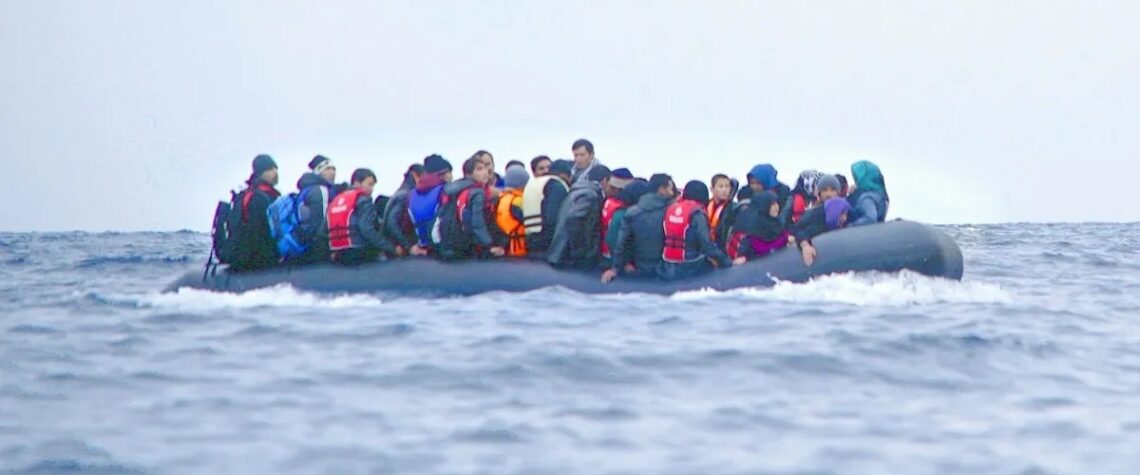
Fleeing hardship in Nigeria, Joy traveled to Libya, where she embarked on a fragile boat bound for Europe. Her crossing of the Mediterranean ended on the shores of Lampedusa, Italy’s southernmost island and a primary point of arrival for migrants attempting to reach Europe. Today, Joy lives in Mantua with her two children.
Despite being one of the most discussed and politically sensitive issues in European politics, the European Union has no common, unified migration policy. Each Member State operates under its own rules and asylum procedures, leading to unequal burdens, particularly for frontline countries like Italy, Greece, and Spain. The EU continues to rely on national policies and temporary crisis responses rather than a unified system, binding upon all member States.
https://www.focuseurope.it/euami-project-lessons-on-the-european-union-and-migration-now-available-on-moodle/
The New Pact on Migration and Asylum, proposed by the European Commission in 2020 and still under negotiation, aims to streamline asylum procedures and promote shared responsibility. However, critics argue that it prioritizes deterrence and externalization, pushing border control to third countries – such as Libya or Tunisia –, instead of fostering the protection of human rights and EU values, and the process of integration.
The dominant paradigm within the EU remains a securitized approach to migration, where migrants are often framed not as individuals seeking safety or opportunity, but as risks to national security, economic stability, or social cohesion. This approach is evident in policies like Frontex operations at sea, increased surveillance at borders, and agreements with non-EU countries to stem migration flows. According to Statewatch, in the current budgetary period (2021-2027), the total value of EU budgets that can be used for border control has nearly doubled, with a 94% increase – from €58.5 billion in the budgetary period 2014-2020 to €113 billion in 2021-2027.
The consequences of such policies are visible in the Mediterranean, often described as Europe’s graveyard. Since 2014, over 32,000 people have died or have gone missing attempting to cross the Mediterranean, according to the Missing Migrants Project dataset of the International Organization for Migration (IOM).
Joy’s experience reflects the broader, complex picture of migration to the European Union – one that, despite decades of debate, still lacks a coherent, humane, binding, and unified policy framework.