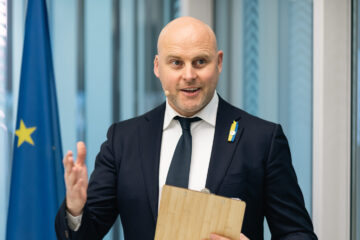
On the morning of July 1st, Sara Bertolli (CesUe and Euractiv Italia), delivered a presentation as part of the initiative “Lab of Europe” to the five partner schools. Her presentation dealt with the historical evolution of the European integration process and described the main institutions that govern the European Union today.
As it was outlined by the speaker, the story of European integration begins during World War II with the Manifesto of Ventotene, written by political exiles confined on the island of Ventotene by the Italian Fascist regime. These visionary leaders were the first to propose the idea of a united Europe, believing that only through close cooperation could future wars be prevented. This vision gained ground after the war as a peace project, designed to maintain peace between European countries that needed stability to reconstruct themselves after a devastating war.
A major political breakthrough came in 1950 with the Schuman Declaration, when Robert Schuman, the French Foreign Minister, together with Jean Monnet, proposed the pooling of coal and steel production under a common High Authority. This plan led to the establishment of the European Coal and Steel Community (ECSC), through the Treaty of Paris signed in 1951 by the 6 founding countries, namely Italy, France, West Germany and Benelux. By placing these crucial industries under shared management, the ECSC aimed to make war between France and Germany materially impossible.
https://www.focuseurope.it/euami-summer-school-2025-students-voices-in-the-afternoon-session/
The success of the ECSC led to the Treaty of Rome in 1957, which created the European Economic Community (EEC) and marked a new stage of cooperation focused on building a common market. Despite this progress, the 1960s experienced a slowdown in the process of integration, mainly due to the skepticism of French President Charles de Gaulle, who was against the limitation of national power in favour of supranational institutions.
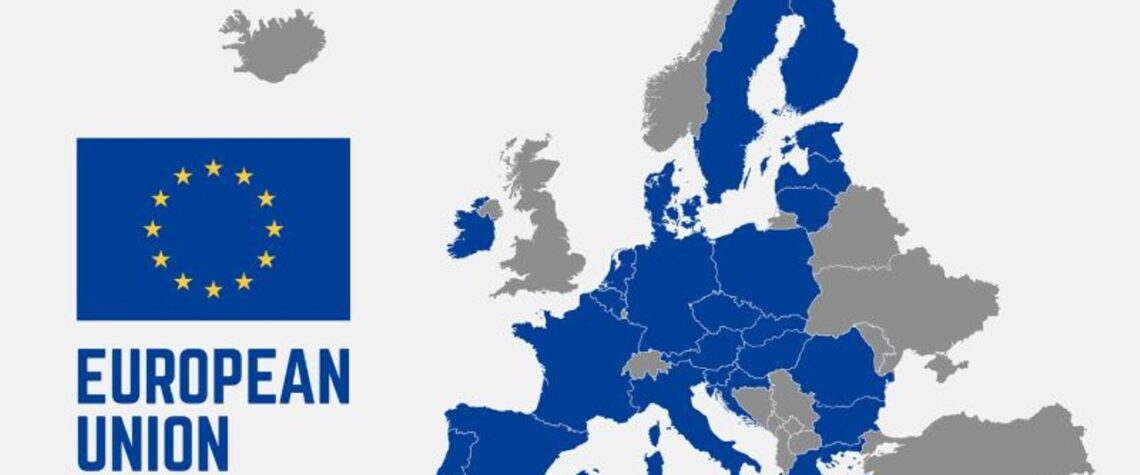
Renewed momentum was experienced in the 1970s with the first enlargement of the Community, which expanded from six to nine members, as Denmark, the United Kingdom, and Ireland decided to join the EEC. In 1979, the European Parliament held its first direct elections, transforming the institution from an advisory assembly into a democratically elected body representing the citizens of Europe. This development was critical in increasing the EU’s democratic legitimacy.
The 1980s proved to be a decisive decade for European integration, largely thanks to Jacques Delors, then President of the European Commission. Under his leadership, important initiatives such as the Schengen Agreement, which abolished internal border controls, and the Erasmus student exchange program were launched. These milestones strengthened ties between member states and paved the way for the Maastricht Treaty of 1992, which formally created the European Union and expanded cooperation into new policy areas.
The 1990s saw further integration with the adoption of the common currency known as Euro, introduced as physically in 2002 and used by most member states. The 2000s witnessed the EU’s largest enlargement in 2004, which integrated numerous Eastern European countries into the Union. However, the far reaching project proposing a unified European Constitution was put aside when it was rejected in national referendums in 2005. Instead, many of its provisions were incorporated into the Lisbon Treaty, signed in 2007, which however did not have the same legal value as a European constitution.
The 2010s were impacted by a series of crises – economic challenges, migration pressures, and political tensions – that tested the Union’s cohesion. These difficulties weakened federalist ambitions and increased the prominence of the European Council, composed of member states’ leaders, which took a central role in setting the political direction of the EU.
The second part of the presentation examined the complex system of governance which characterises the European Union today. Firstly, the European Commission, which acts as the executive body, and detaining the exclusive power to propose legislation.
Secondly, the European Parliament, which represents citizens through direct elections and shares legislative power with the Council of the European Union, which instead represents member states’ governments through national ministers and meet in different configurations depending on the matter at stake.
The European Council, the most recent institution, provides overall political guidance, while the Court of Justice of the European Union ensures the uniform application and interpretation of EU law across all member countries.