Climate change is not only one of the most pressing scientific, political and environmental challenges of our time, but also an increasingly fertile ground for misinformation and conspiracy theories. From the denial of global warming to attempts to undermine the credibility of the scientific community, conspiracy narratives contribute to growing distrust, polarisation and confusion in public debate, making it increasingly difficult to distinguish legitimate democratic discussion from the manipulation of scientific evidence.
Why has the climate crisis become such a prominent target for disinformation? What rhetorical strategies are used to make scientifically unfounded claims appear credible? And, most importantly, how can citizens, journalists and educators recognise and challenge these narratives without further reinforcing social and political polarisation?
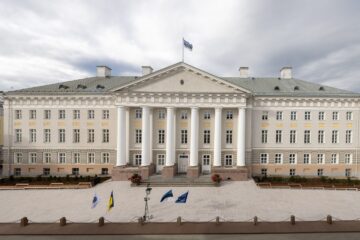
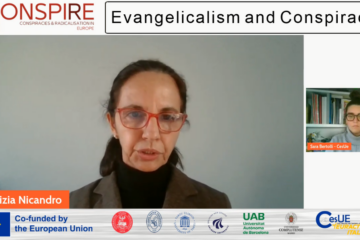
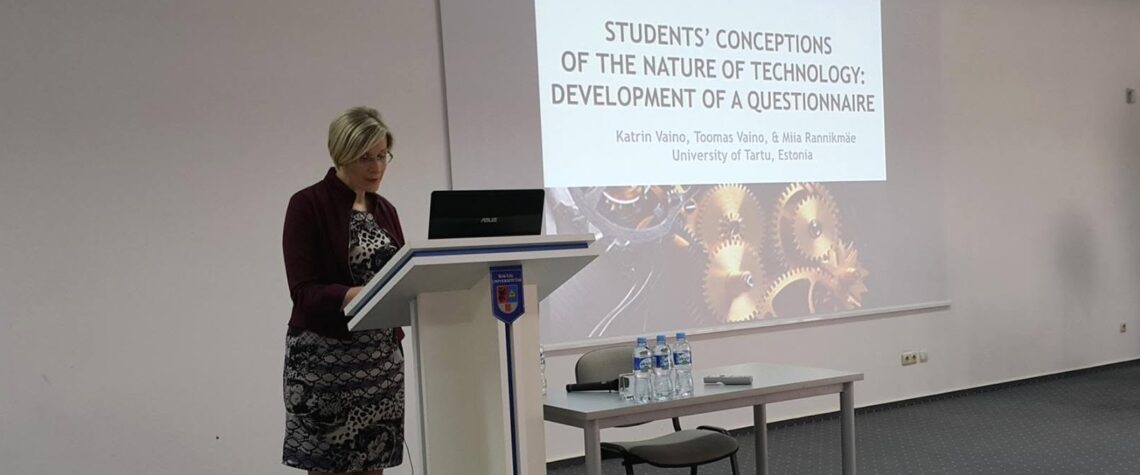
These are some of the questions explored by Katrin Vaino, a researcher at the Centre for Science Education at the University of Tartu, Estonia, in an interview conducted by Sara Bertolli, journalist at Focus Europe Italia, within the framework of the European project CONSPIRE – CONSPIracism and RAdicalisation Risks in Europe.
Funded by the Erasmus+ programme and coordinated by the University of Turin, CONSPIRE brings together University of Torino (PI, ITA), the Universitat Autonoma de Barcelona (ES), the University of Tartu (EE), Istanbul Teknik University (TR), Aalborg University (DK) and CesUE/Focus Europe (ITA) to investigate conspiracy theories and radicalisation risks, while developing innovative educational approaches to strengthen critical thinking, media literacy and democratic participation. Running from 2024 to 2027, the project combines academic research with non-formal education, participatory workshops, role-playing activities and community engagement. This interview is part of the Conspiracy Pills, a series of contributions from academics and professionals designed to enrich students’ learning experiences and encourage broader public reflection on the mechanisms of disinformation.
Throughout the conversation, Vaino examines the scientific, political and psychological factors that make climate change particularly vulnerable to conspiracy narratives. From the selective use of evidence, commonly known as cherry-picking, to the promotion of fake experts and the deliberate misrepresentation of scientific uncertainty, she explains how climate change denial often seeks to establish credibility by imitating the language and methods of scientific reasoning.
However, the discussion goes beyond simply identifying misleading information. At its core lies the crucial role of education in developing not only the ability to critically evaluate evidence, but also intellectual virtues such as humility, objectivity and a willingness to reconsider one’s beliefs in light of new information.
The central message is that countering disinformation is not simply about exposing falsehoods, but also about building bridges of dialogue and trust. In a context where the climate crisis intersects with economic interests, political decisions and genuine social concerns, fostering informed citizenship means learning to listen, understand and engage with different perspectives without compromising scientific rigour.
Ultimately, the interview highlights a challenge that extends far beyond climate communication: how to equip individuals with the critical skills and intellectual openness needed to navigate an increasingly complex information environment. A challenge that lies at the heart of the CONSPIRE project and concerns not only universities and educators, but the future of democratic societies as a whole.