At Aalborg University in Copenhagen, 28 master’s students explored a fictional Nordic political crisis set in 2034. Through the CONSPIRE role-playing methodology, they discovered how conspiracy narratives can exploit political polarisation, digital technologies and institutional mistrust — and why challenging them requires critical thinking, evidence and persuasive communication.
What happens when a leaked political agreement, a potentially manipulated video and a nationwide internet blackout occur almost simultaneously? How can citizens distinguish legitimate concerns about political power from unfounded conspiracy theories? And how might artificial intelligence make the boundaries between authentic and fabricated information increasingly difficult to recognise?
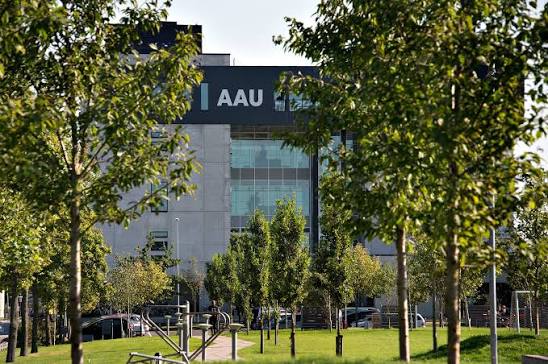
These questions were at the centre of “Play the Conspiracy”, an interactive workshop held on 20 February 2026 at Aalborg University (AAU), Copenhagen, as part of the Erasmus+ project CONSPIRE – CONSPIracism and RAdicalisation Risks in Europe.
The activity involved 28 master’s students and four tutors and teachers, bringing the project’s innovative educational methodology into a learning environment focused on communication, politics, technology and democratic debate.
Through Conspirology, the role-playing game developed within CONSPIRE, students were challenged to construct and critically examine conspiracy narratives in a fictional future society shaped by political tensions, technological manipulation and growing distrust of public institutions.
Rather than approaching conspiracy theories solely as academic concepts, participants experienced how such narratives can be created, adapted and challenged through competing communication strategies.
Welcome to 2034: the Great Nordic Union
The workshop was built around an original fictional scenario titled “The Shadow Fight – The Great Nordic Union, Anno 2034.”
In this imagined future, Denmark has become part of a new Nordic Union established in response to the political, economic and climate-related crises of the late 2020s.
The new political system is characterised by growing polarisation and competition between three political blocs.
The Left Bloc, advocating transparency and security, promotes public oversight and tighter regulation of digital media to combat misinformation. However, its proposals raise concerns about possible restrictions on freedom of expression.
The Right Bloc presents itself as the voice of ordinary citizens against political and economic elites, mobilising dissatisfaction and institutional mistrust through direct and confrontational rhetoric.
The Center Alliance seeks political stability and pragmatic solutions, but is frequently perceived as distant from citizens and closely connected to powerful interests.
In this environment, a conspiracy theory begins to circulate about a mysterious Shadow Network, allegedly composed of influential political and business figures secretly manipulating the population through digital data collection and political control.
A central figure in the narrative is Vilhelm von Carlson, an eccentric businessman with connections to the Center Alliance and the highest levels of the economic establishment.
The scenario creates an environment in which concerns about political accountability, surveillance, media manipulation and elite influence can easily develop into broader conspiratorial interpretations.
Three events that trigger a political crisis
The fictional narrative unfolds through three interconnected events.
The first involves a leaked document revealing an alleged secret agreement between political leaders. According to the leak, a representative of the Left Bloc has agreed to support the Center Alliance’s budget proposal in exchange for suppressing potentially damaging video footage from her political past.
The second event concerns a video showing a senior security adviser discussing the need to control public narratives.
Although the footage initially appears credible, experts suspect that it may have been manipulated using advanced deepfake technology. The adviser’s previous connections to influential business figures further complicate the situation.
The third event is a dramatic 24-hour internet blackout affecting the entire Nordic Union.
The government attributes the disruption to a foreign hybrid attack, but significant sections of the population reject this explanation, suspecting a domestic cover-up or deliberate manipulation.
Together, these events create a highly unstable information environment.
The participants must interpret incomplete evidence, assess competing explanations and construct communication strategies in a context where political interests, technological uncertainty and public distrust reinforce one another.
The challenge is not simply to decide which explanation is most attractive, but to understand how conspiracy narratives can connect apparently unrelated events into a convincing account of hidden power.
Two competing teams and a common challenge
The Aalborg workshop adapted the Conspirology methodology into a structured competition between two student teams: conspiracy theorists and debunkers.
The conspiracy theorists were responsible for developing an overarching explanation connecting the political scandal, the manipulated video and the internet blackout.
Their task was to create a convincing narrative that incorporated the events, developed plausible relationships between the actors and persuaded the audience that a hidden network was influencing political decisions.
The debunkers faced the opposite challenge.
They had to develop a coherent counter-strategy, critically examine the claims presented by the conspiracy theorists and identify alternative explanations grounded in evidence and credible reasoning.
Both groups initially worked independently, without knowing the details of the other team’s strategy.
During the first presentation round, each team introduced its main arguments. This initial confrontation gave students the opportunity to assess the strengths and weaknesses of the competing narratives.
The teams then returned to their work, developing their approaches in greater detail before presenting their final arguments.
Throughout the exercise, judges and participants evaluated the competing strategies, considering how effectively the groups incorporated the fictional events and whether their arguments were persuasive, coherent and original.
This structure encouraged students to combine creativity with analytical reasoning, while experiencing the different demands involved in constructing and challenging conspiracy narratives.
Deepfakes, artificial intelligence and the future of misinformation
One of the most distinctive aspects of the Danish workshop was its focus on the technological dimensions of contemporary political communication.
The fictional scenario placed a potentially manipulated video at the centre of a political crisis, inviting students to reflect on the growing capacity of artificial intelligence to produce convincing but misleading audiovisual content.
The workshop also allowed participants to use AI tools to support the development of images, arguments and other materials.
This added a particularly relevant dimension to the educational experience.
Students were not only discussing how digital technologies can facilitate the production and circulation of misleading information. They were also able to explore how technological tools might be incorporated into competing communication strategies.
The exercise therefore connected the study of conspiracy theories with wider questions concerning synthetic media, digital credibility, manipulation and trust.
In an information environment where realistic images, videos and narratives can increasingly be generated or altered, the ability to assess the reliability of evidence becomes a crucial democratic competence.
The Aalborg experience demonstrated the importance of examining not only the content of political claims, but also the technologies and communication strategies through which they reach citizens.
The challenge of persuasive political communication
The game was organised around successive rounds of group work and public presentations, with new events introduced to increase the complexity of the scenario.
Participants were encouraged to use evidence, sources and visual materials, while also paying attention to the originality and persuasive effectiveness of their arguments.
The final assessment considered several dimensions: incorporation of the provided material, persuasive communication, creativity, narrative construction and the convincing use of political discourse.
These criteria reflected a central tension in the study of conspiracy theories.
A narrative can be highly original, emotionally engaging and rhetorically effective without being supported by reliable evidence.
Conversely, a carefully constructed response may struggle to persuade an audience if it is unable to communicate complex information clearly.
By working through these competing demands, students experienced how political narratives are developed and how communication can influence the interpretation of events.
The exercise highlighted the importance of combining critical analysis with effective communication rather than treating them as separate competences.
Why conspiracy theories are so difficult to challenge
One of the main educational findings from the workshop was the ease with which conspiracy theories can be constructed around a limited set of events.
The fictional Nordic crisis provided students with the ingredients of a compelling conspiracy narrative: political secrecy, powerful business interests, disputed audiovisual evidence, technological uncertainty and a major disruption affecting everyday life.
By connecting these elements, students could develop explanations that appeared internally coherent, even when their underlying claims were speculative.
The activity also demonstrated how conspiracy narratives can create a self-contained interpretation of reality, in which different events are presented as evidence of the same hidden plan.
For debunkers, responding effectively required more than rejecting individual claims.
They had to challenge the overall structure of the narrative, develop alternative explanations and communicate them in a convincing way.
This was one of the central lessons identified in the workshop report: constructing a conspiracy theory can be surprisingly straightforward, while countering it may be considerably more demanding.
Problem-Based Learning meets Conspirology
The Aalborg experience is particularly significant because it connects the CONSPIRE methodology with the university’s internationally recognised tradition of Problem-Based Learning (PBL).
Aalborg University is known for an educational approach that encourages students to work collaboratively on complex problems, connect theory with practice and actively participate in the learning process.
The Copenhagen workshop reflected many of these principles.
Students were presented with an open-ended problem, required to work in teams, encouraged to develop independent strategies and challenged to respond to an evolving situation.
The learning experience did not depend on finding a single predetermined answer.
Instead, participants had to analyse a complex scenario, evaluate different possibilities, communicate their reasoning and reflect on the consequences of their choices.
In this sense, Conspirology offered a practical example of how non-formal educational methodologies can complement formal university teaching.
Role-playing transformed an abstract subject into an interactive experience, allowing students to explore the relationship between narrative construction, political communication and critical judgement.
From initial reluctance to active engagement
According to the workshop report, the role-playing format initially generated some hesitation among participants.
However, as students became more familiar with the scenario and their assigned roles, they engaged enthusiastically with the activity.
A tutor and course organiser described the experience:
“The students showed some initial reluctance with the role-play format, but were enthusiastic once they got into the game.”
The same reflection highlighted the importance of integrating the activity with the wider university course and ensuring that its learning objectives were appropriate for master’s-level students.
This observation points to an important consideration for innovative higher education.
Participatory methods can generate engagement, motivation and practical understanding, but their educational value depends on how carefully they are connected to academic content, learning objectives and opportunities for critical reflection.
The educational potential — and limits — of role-playing
The Aalborg team also offered a balanced assessment of the Conspirology methodology.
The workshop demonstrated that role-playing can provide an immediate and engaging understanding of how conspiracy theories are developed and why they can be difficult to challenge.
At the same time, the report acknowledged that a simulation of this kind may offer a relatively broad understanding of conspiracy thinking without fully addressing all its theoretical nuances and complexities.
This distinction is important.
Experiential learning does not replace academic research or detailed theoretical study. Instead, its strength lies in making abstract concepts tangible and providing students with practical opportunities to apply knowledge.
The Danish experience therefore reinforces the value of combining lectures, research-based learning, discussion and participatory activities within a coherent educational pathway.
For CONSPIRE, this integration is essential to ensuring that innovative teaching methods contribute not only to student engagement, but also to deeper critical understanding.
Aalborg University’s contribution to CONSPIRE
Within CONSPIRE, Aalborg University contributes its expertise in communication, media, technology, political discourse and democratic public spheres.
The Danish workshop reflected these strengths through a scenario centred on political polarisation, technological manipulation, public communication and institutional trust.
By exploring a fictional Nordic society facing multiple interconnected crises, students were encouraged to reflect on challenges that are highly relevant to contemporary European democracies.
These include the circulation of misleading political narratives, the growing sophistication of manipulated media, public concerns about surveillance and the difficulties involved in maintaining trust in information during periods of uncertainty.
The workshop also demonstrated the educational potential of interdisciplinary collaboration.
Political analysis, communication studies, digital technology and critical reasoning were brought together within a single learning experience.
This approach reflects CONSPIRE’s wider ambition to help students understand conspiracy theories not simply as isolated false claims, but as complex narratives shaped by social, political and technological conditions.
Learning to navigate an uncertain information environment
The Aalborg workshop showed how easily an environment marked by uncertainty, political competition and technological disruption can become fertile ground for conspiracy thinking.
It also demonstrated that responding to misinformation requires a combination of skills: the capacity to evaluate evidence, recognise misleading narratives, understand communication strategies and engage critically with competing explanations.
By taking part in Conspirology, students experienced these challenges directly.
The fictional setting of the Great Nordic Union made it possible to explore sensitive questions about political power, technological manipulation and democratic accountability within a structured educational environment.
At the same time, the workshop’s critical reflections underlined the importance of connecting immersive learning with rigorous academic analysis.
Through the Danish experience, CONSPIRE demonstrates how role-playing, collaborative problem-solving and interdisciplinary education can help students better understand the mechanisms of conspiracy thinking and the challenges of democratic communication.
The lesson extends beyond the fictional world of 2034: in an increasingly complex information ecosystem, citizens need not only access to information, but also the ability to question narratives, assess evidence and communicate responsibly.