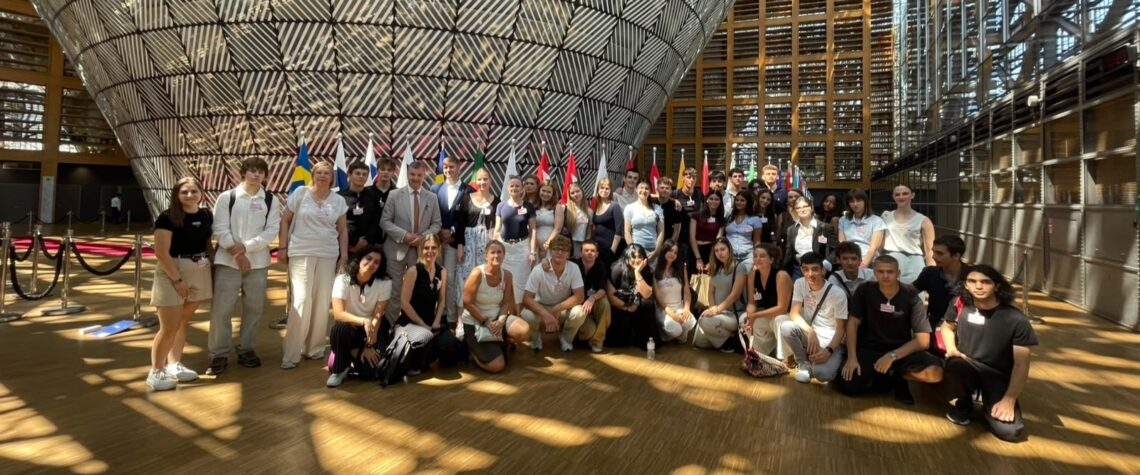
On Thursday 16 July, the forty-five students and ten teachers from the European Values and Migration Summer School are back in the European Quarter, this time at the buildings of the Council of the European Union and the European Coucil.
Waiting for them is Manouela Mavroudi, Political Administrator for Research, Space, Company Law and Consumer Protection at the General Secretariat of the Council of the European Union. Over the course of the meeting, she walks the students through the workings of an institution that, unlike the Parliament, sometimes remains largely unfamiliar to the general public.
Mavroudi explains the difference between the Council of the EU, where national ministers negotiate and adopt legislation policy area by policy area, and the European Council, where the heads of state and government set the Union’s overall political direction. She traces how the two bodies’ work interlocks with that of the Parliament and the Commission – the same institutions the students visited two days earlier – showing how a piece of EU legislation moves between them before it becomes law.
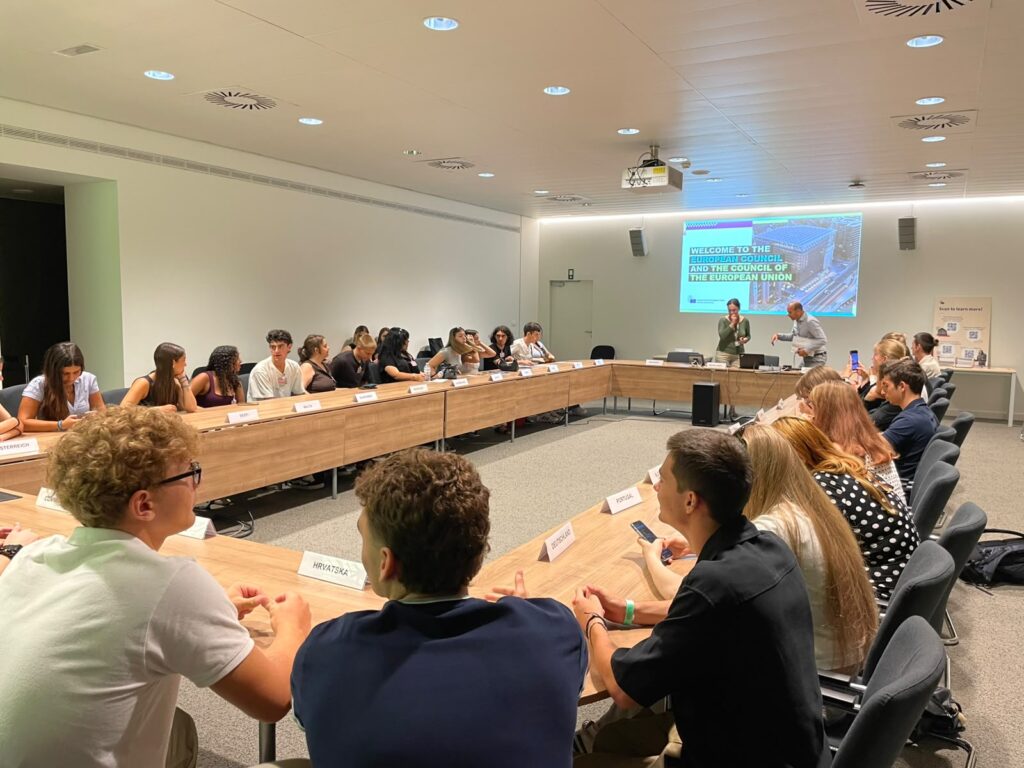
The conversation soon turns political. Asked by one of the students whether the Union should become more united and federal, Mavroudi is careful to frame her answer as personal rather than institutional. “This is my own opinion, not the Council’s”, she says, before offering a comparison that draws a few smiles from the room: “The European Union is like a marriage: you have to give up a bit of yourself to get something bigger in return”. She goes on to say that she is in favour of Member States ceding more sovereignty to the Union.
The students press further, asking what it actually means to work as a European civil servant day to day, and how a career at the Council differs from one at the Parliament or the Commission. Mavroudi describes an environment where technical expertise and diplomatic patience matter in equal measure, since every file has to move forward through consensus among twenty-seven governments.
Then the questions turn to migration and the timing is no coincidence. The students ask what position the Council currently holds on the issue, a question tied directly to the work awaiting them the next day. As part of the Summer School, they are preparing to simulate a meeting of the EU’s Foreign Affairs Council, tasked with negotiating the Return Regulation: a file the European Parliament has already approved and which the Council of the EU still has to discuss.
Right under the lantern, the group has an unplanned encounter with Andrzej Halicki, a Polish MEP from the EPP group, who stops to talk with the students and takes the time to answer their questions. The visit concludes with a group picture on the red carpet behind the Council’s lantern, on the very doorstep where politicians step in for their own meetings.
Here the link to MEP’s video