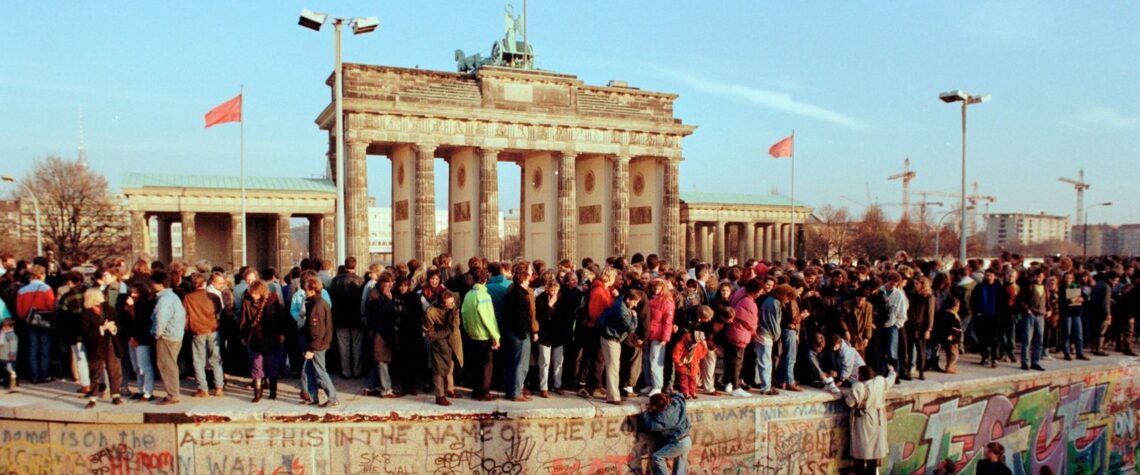
This is the fourth lesson of the first module in EUPress’ teacher training program by Professor Fabio Masini. This module covers the process from the fall of the Berlin Wall to the creation of the EU and the Euro.
The journey from the 1960s to the birth of the euro is more than a tale of treaties — it’s a story of political stalemate, monetary experimentation, global shocks, and institutional innovation. Lesson 1.4 explores the turbulent decades between the collapse of Bretton Woods and the launch of Europe’s single currency, tracing the evolution of EU integration through conflict, crisis, and reform.
De Gaulle, the “Empty Chair,” and the veto era
The mid-1960s were marked by French President Charles de Gaulle’s resistance to supranational authority. In 1965, he staged the infamous “Empty Chair Crisis” — boycotting meetings to oppose plans for a more autonomous European Commission. The ensuing Luxembourg Compromise (1966) granted Member States the right of veto, setting a precedent for intergovernmental deadlock that would haunt European integration for decades.
Hallstein’s failure: No fiscal autonomy, no federalism
Walter Hallstein, the first president of the European Commission, envisioned a European Union with genuine own fiscal resources, capable of running industrial and agricultural policies beyond national constraints. But his project failed. Without independent revenue-raising powers, the Community relied on national contributions — locking the system into unanimity and weakening supranational ambition.
Currency chaos and the fall of Bretton Woods
Externally, the international monetary system was collapsing. The U.S. dollar, weakened by deficits and inflation, lost its convertibility to gold in 1971. European governments, deeply interdependent, felt the shockwaves. The Werner Report (1969) proposed a single European currency within 10 years — but its recommendations were mostly ignored.
New members, new shocks
After de Gaulle’s resignation in 1969, the UK, Denmark, and Ireland joined the Community in 1973 — just as the Bretton Woods system dissolved and the first oil shock hit. The cost of oil quadrupled from $3 to $12 per barrel after the Yom Kippur War, severely damaging European economies and exposing the fragility of national monetary strategies.
From the “Snake” to the EMS: The road to currency stability
Europe responded to monetary instability with a series of experiments:
- The European Monetary “Snake” (1972) attempted to limit exchange rate fluctuations, but lacked binding commitments.
- In 1979, the European Monetary System (EMS) introduced more structured currency coordination, including the European Currency Unit (ECU) — a precursor to the euro.
The EMS was launched just before the first direct elections to the European Parliament, symbolizing a link between monetary cooperation and democratic legitimacy.
Padoa-Schioppa’s “Inconsistent Quartet”: A blueprint for the euro
Behind the institutional shifts, Italian economist Tommaso Padoa-Schioppa laid out a decisive argument in 1982: Europe could not have all four of these elements at once:
- Free movement of goods
- Free movement of capital and labor
- Fixed exchange rates
- Independent national monetary policy
One of these had to go. Europe chose to give up national monetary sovereignty — paving the way for a single currency.
A layered path to integration
The long 1970s and 1980s were marked by crisis after crisis — but also by incremental institution-building. From de Gaulle’s veto to the oil shock, from the Werner Report to the European Monetary System, each setback fueled the political and economic logic for deeper integration.
By the time the Berlin Wall fell in 1989, the groundwork had been laid: Europe had learned that monetary independence without coordination was untenable — and that a shared market needed a shared currency, backed by shared authority.
The euro was not born overnight. It emerged from decades of hesitation, compromise, and innovation — the product of a Union repeatedly forced to respond to crisis, and in the process, forced to grow.