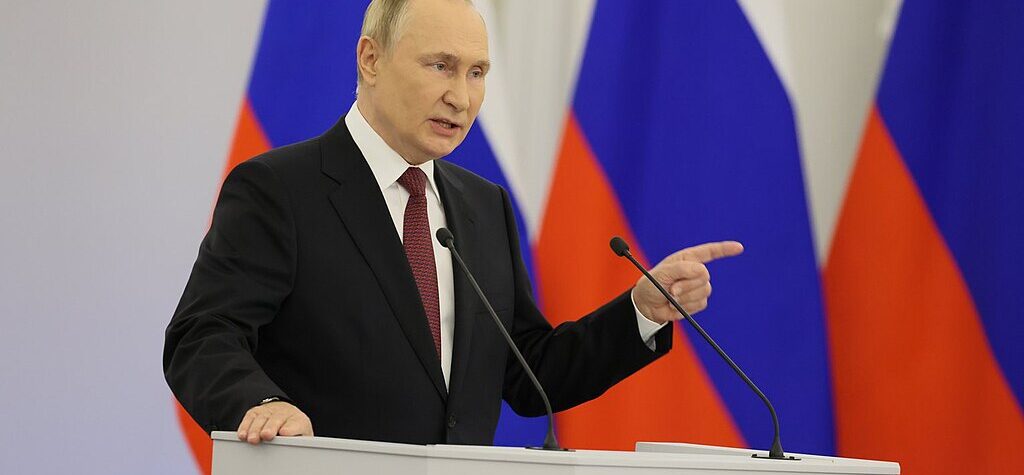
When Russia launched its full-scale invasion of Ukraine in 2022, the Kremlin didn’t just mobilise tanks and missiles. It unleashed subtle yet powerful ideological contamination. Over years of intensifying illiberalism under Vladimir Putin, Moscow has mastered the art of framing raw geopolitical aggression as something defensive, moral, and ultimately sacred. Within Russia, the war is not sold as a choice, but as a tragic, heroic necessity to safeguard national sovereignty and fight resurrecting fascism.
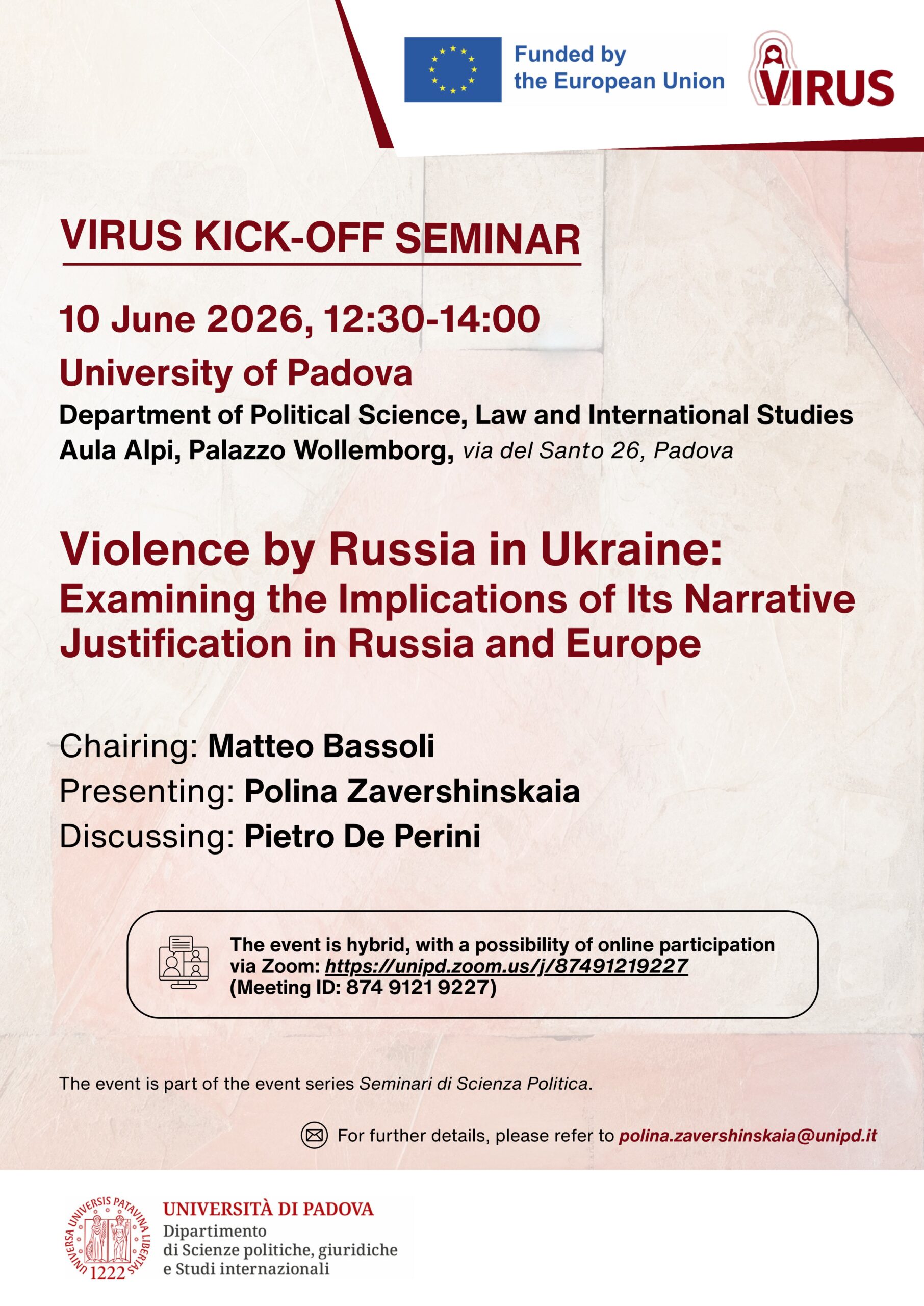
But the true danger of this narrative does not stop at Russia’s borders. This rhetoric is like a virus, it adapts, it mutates, and it finds (willing) hosts inside Europe. As we prepare to launch the Horizon Europe-funded VIRUS project (Violence by Russia in Ukraine: Examining the Implications of Its Narrative Justification in Russia and Europe) at the University of Padova this June, the urgency of mapping this narrative contagion has never been more acute.
European cohesion is under what we define as a ‘narrative siege’. The threat is no longer just external cyber warfare or top-down disinformation campaigns like the one run by Russia Today. It is the organic absorption of these ideas into the European domestic fabric.
The Domestication of Illiberal Narratives
In Germany, Austria, and Italy, parliamentary parties with longstanding ties to Moscow—such as the Alternative for Germany (AfD), the Freedom Party of Austria (FPÖ), and the League (Lega)—have successfully imported the Kremlin’s perspectives, adapting them for the internal public sphere.
They use a dual rhetorical strategy that subtly mirrors Moscow’s worldview. First, they portray Russian aggression as an understandable, although unfortunate, reaction to Western encroachment (Last Resort Myth). Second, they frame the EU’s financial and military support for Ukraine’s self-defence as a reckless, warmongering escalation (Escalation Trap). In so doing, these actors exploit public anxieties, fuel internal polarisation, and erode democratic norms. In its worst manifestations, this rhetoric moves from the parliamentary floor to the streets. We see this in targeted campaigns like the Identitarian Movement’s Aktion Solidarität in Germany, which staged a symbolic ‘reopening’ of the Nord Stream 2 pipeline, directly aligning local economic grievances with Moscow’s strategic goals.
A Transatlantic Shift
This internal European polarisation is further exacerbated by the ongoing transatlantic shift. The isolationist stance put forward by Donald Trump is jeopardising the traditional international solidarity alliances. When the 2025 U.S. National Security Strategy explicitly signals support for ‘patriotic European parties’ under the guise of reviving national sovereignty, it provides the green light to the very illiberal actors within the EU who are actively dismantling European solidarity from within. This may align with the short-term interests of the President, but it raises a crucial question about a more fundamental alignment—or lack thereof—between the US and the EU.
Moving Beyond Fact-Checking
Europe has not been blind to this threat. Regulatory frameworks like the Digital Services Act (DSA) and the newly consolidated European Democracy Shield (2025) are significant efforts in holding digital platforms accountable and countering foreign interference. Civil society and fact-checking networks monitor the daily flood of fake news.
However, debunking isolated lies is no longer enough. We must understand the logic behind the message. The VIRUS project aims to shift the defensive line from simple fact-checking to deep systemic analysis. It is not enough to debunk a false statement. We must deconstruct the rhetorical infrastructure that makes the falsehood feel ‘true’ to a desengaged voter in Munich, Graz, or Venice.
Through our two-year initiative will cross-examine Kremlin propaganda alongside the output of European illiberal parties. By monitoring socio-political indicators—ranging from hate-crime proxies and protest-related violence to subtle policy shifts—we aim to map exactly how these narrative justifications translate into escalation of physical violence and democratic erosion.
Building the Antidote
To fight an evolving narrative threat, academics, policymakers, and the public need shared tools. Over the next two years, the VIRUS project will build a public infrastructure for resistance, launching open-access datasets, educational workshops, and a dedicated tracking platform at virus-project.eu.
Disinformation wins when it feels normalised. By exposing the ‘narrative industries’—the interconnected webs of think tanks, media platforms, and political actors that legitimise violence—we can equip citizens and policymakers to recognise the infection before it takes root.
The defence of Ukraine is inseparable from the defence of European democracy. If we allow the moral justification of violence to become a normalised currency in European politics, the virus won’t just destroy European cohesion—it will reshape it in the Kremlin’s image.
Polina Zavershinskaia is an MSCA Postdoctoral Fellow at the University of Padova and the principal investigator of the VIRUS project. Matteo Bassoli is an Associate Professor at the Department of Political Science, Law and International Studies at the University of Padova and the scientific supervisor of the project. The VIRUS project kick-off seminar will take place on June 10, 2026.
Funded by the European Union. Views and opinions expressed are, however, those of the author(s) only and do not necessarily reflect those of the European Union or the European Research Executive Agency (REA). Neither the European Union nor the granting authority can be held responsible for them.