From September 14 to 20, 2025, the second Summer School of the Jean Monnet Project “European Values” will take place. Around forty students, accompanied by their theachers, from Italy, Greece, Denmark, and Cyprus will travel to Brussels to engage directly with the European Union’s institutions and civil society, while also exploring the historic roots and shared values of Europe.
This article has been written by Matilda Aleandri, collaborator at Euractiv Italia.
“European Values” is a EU-funded project that aims at actively promoting the European citizenship and the European civic education to high schools’ students.
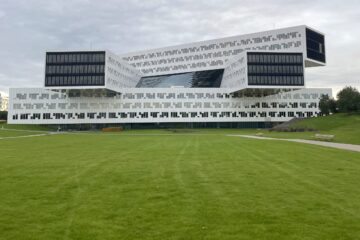
The project – lead by University eCampus – involves from Italy the Istituto di Istruzione Superiore Montessori Repetti and the Istituto di Istruzione Superiore N. Machiavelli. The Greek partner is the 2nd Geniko Lykeio of Arta, while Denmark is represented by Ørestad Gymnasium and Cyprus by Lykeio Agiou Antoniou. The initiative also benefits from the support of CesUe, a spin-off of the Scuola Superiore Sant’Anna in Pisa.
The initiative seeks to systematically integrate European themes into both teaching and extracurricular activities in the partner schools. By focusing on issues such as EU foreign policy, defence, the green transition, and fundamental values, the programme promotes active citizenship and helps students gain a deeper understanding of Europe’s global role.
The Summer School – co-organized by CesUe and eCampus University – will combine active and interactive learning methods. Students will take part in visits, meetings, debates, workshops, and simulations, making use of the knowledge and skills developed throughout the project.
The programme includes visits to the European Parliament, the European Commission, and the European Council, a session at the Tuscany Region Office of the European Union, a guided tour of the House of European History, and debates and role-playing activities with JEF Europe, the Young European Federalists.
Students will also embark on a study trip to Bruges and Ghent, connecting European cultural heritage with today’s challenges, and engage in group presentations, workshops, and Q&A sessions.
The original article is available here.