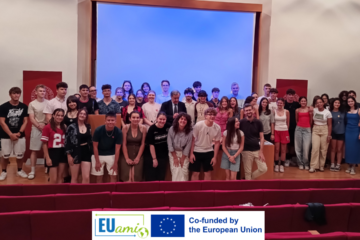
This year, one hundred Sixth Form students from Sant Josep Obrer have had the exciting opportunity to visit Portugal, an experience rich of historical and cultural significance.
Spain and Portugal, while distinct in many ways, share a fascinating history and a mutual path within the European Union, making this trip was more than just an excursion, it has been a journey into our shared past and future.
The aim of European Values and Migration Project (EUAMI) is to sow the seeds of innovative pedagogical practices, promoting a vibrant exchange of ideas and methodologies pertaining to EU matters, with a specific focus on migration.
Despite their distinct national identities, Spain and Portugal’s histories are intertwined. Both nations endured long dictatorships during the 20th century: Salazar’s regime in Portugal and Franco’s rule in Spain.
These oppressive periods shaped the collective longing for freedom and democracy, culminating in a shared aspiration to join the European Communities, the precursor to today’s Eropean Union.
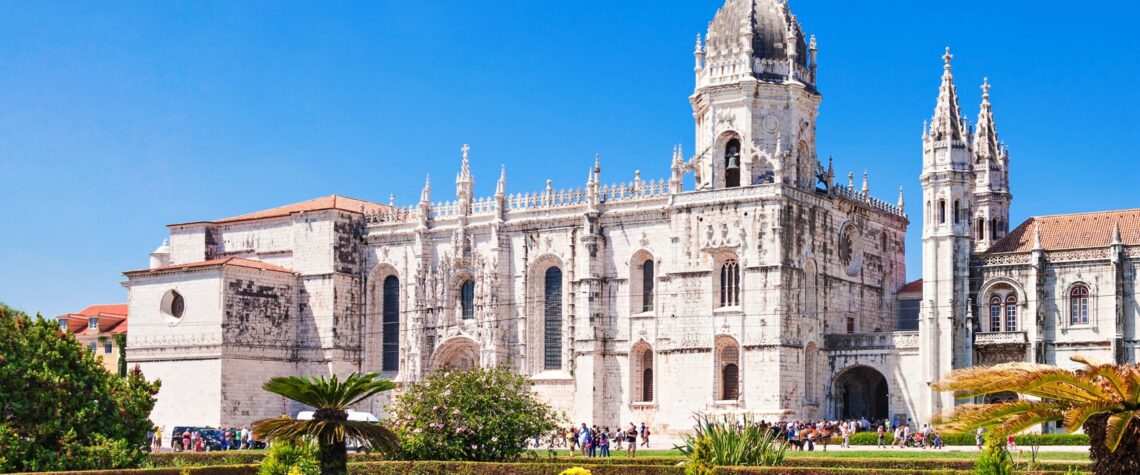
On June 12, 1985, in the majestic Jerónimos Monastery in Lisbon, Spain and Portugal signed their respective Treaties of Accession. This monumental event symbolized a new era of democracy, economic growth, and European integration for both nations.
https://euractiv.it/section/european-values-and-migration/news/sant-josep-obrer-school-students-mobilise-to-show-solidarity-with-valencians/
The Jerónimos Monastery itself is not only a stunning architectural masterpiece but also a testament to Portugal’s historical contributions to European culture and exploration. Visiting this site allowed students to reflect on the significance of this shared milestone in the context of the EU’s evolution.
The Treaty of Lisbon, signed in the same city, reinforced core democratic values such as equality, representative democracy, and participatory governance, principles that continue to guide the EU today.
In preparation for this visit, the students have been exploring similarities and differences between Spain and Portugal. Both nations have vibrant cultures deeply influenced by their histories of exploration, trade, and art. However, differences emerge in areas such as language, gastronomy, and regional traditions. For instance, while Spain boasts a diversity of languages such as Catalan, Basque, and Galician, Portugal maintains a unified linguistic identity with Portuguese.
https://www.focuseurope.it/international-collaborative-classes-at-canossa-campus-a-journey-on-migration/
Economically, both nations faced challenges during the financial crisis of the late 2000s but have since demonstrated resilience. Tourism plays a pivotal role in both economies, with Spain known for its iconic cities like Barcelona and Madrid, and Portugal for its picturesque landscapes and historic towns like Lisbon and Porto.
The students’ visit to Portugal, particularly the Jerónimos Monastery, has been an invaluable experience in understanding the deep connections between our two nations. It serves as a reminder of the importance of unity and cooperation in shaping the future of Europe: a future built on shared values and a commitment to progress.