Freedom of expression, independent journalism and political pluralism are essential foundations of democratic societies. Yet, in political environments characterised by increasing authoritarian tendencies, these fundamental principles can come under significant pressure. Opposition voices may face legal restrictions, institutional obstacles, economic intimidation and public narratives designed to undermine their credibility. In such circumstances, controlling information becomes not only a means of influencing public opinion but also a powerful instrument for defining the boundaries of legitimate political debate.
How can independent journalists, academics and civil society organisations continue to operate when traditional platforms for public discussion become increasingly restricted? What mechanisms are used to stigmatise political opposition and discourage criticism of those in power? And how can alternative media initiatives contribute to preserving democratic dialogue in environments marked by political polarisation and institutional pressure?
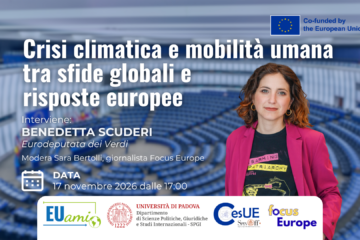
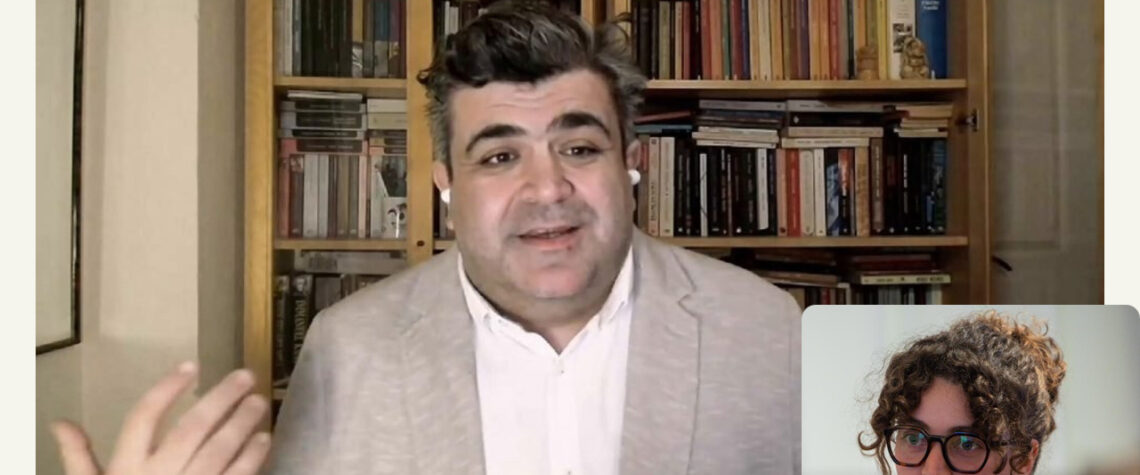
These questions are explored in an interview with İlkan Dalkuç, public affairs expert and founder of 1984, a Turkish civil society organisation committed to promoting pluralism, democratic values, individual freedoms and rational public debate, conducted by Sara Bertolli, journalist at Focus Europe Italia, within the framework of the European project CONSPIRE – CONSPIracism and RAdicalisation Risks in Europe.
Funded by the Erasmus+ programme and coordinated by the University of Turin, CONSPIRE brings together European universities and CESUE/Focus Europe to investigate conspiracy theories and radicalisation risks while developing innovative educational approaches to strengthen critical thinking, media literacy and democratic participation. Running from 2024 to 2027, the project combines academic research, non-formal education, participatory workshops and community engagement. This interview is part of the Conspiracy Pills, a series of contributions from academics, journalists and professionals designed to encourage students and wider audiences to examine the mechanisms through which misinformation, political narratives and institutional power influence contemporary societies.
Drawing on his experience in Turkish civil society, Dalkuç explains the circumstances that led to the establishment of 1984. As journalists, academics and public commentators progressively lost access to traditional media outlets and spaces for independent discussion, the organisation emerged as an alternative platform where diverse perspectives could be expressed and debated. Through publications, educational initiatives, collaborations and public engagement, 1984 seeks to support intellectual independence and maintain opportunities for open discussion within Turkey’s increasingly constrained political environment.
A central theme of the conversation is the relationship between political authority and freedom of expression. Dalkuç describes how judicial proceedings, defamation accusations and other forms of legal pressure can discourage criticism of the government and contribute to a climate of self-censorship. Particular attention is devoted to politically sensitive issues, including national security, foreign policy and the Kurdish question, where public debate may become especially difficult.
The interview also examines the structural pressures affecting independent journalism. According to Dalkuç, the concentration of media ownership, political connections within the media sector and the role of administrative and regulatory institutions can significantly restrict the ability of opposition voices to reach wider audiences. Beyond direct censorship, economic vulnerability and the fear of legal consequences may discourage potential investors and supporters from financing independent media initiatives.
Particularly significant is Dalkuç’s reflection on how political power can shape the narratives through which citizens interpret events. When governing authorities exercise substantial influence over media channels and institutional communication, opposition actors may find themselves responding to debates already framed according to the government’s priorities and assumptions. In this context, the stigmatization of opposition becomes more than a question of individual reputations: it affects the broader conditions under which political alternatives can be discussed and evaluated.
The conversation therefore highlights the importance of independent platforms capable of sustaining public debate outside dominant political narratives. Civil society organisations, journalists and academic communities can play a crucial role in preserving spaces for disagreement, encouraging evidence-based discussion and ensuring that different perspectives remain visible.
Ultimately, the interview demonstrates how the stigmatization of political opposition can operate through interconnected legal, economic, institutional and communicative mechanisms, progressively weakening pluralism and restricting democratic participation. Understanding these processes is essential for recognising how public discourse can be shaped by unequal access to information and political power.
In line with the objectives of CONSPIRE, Dalkuç’s reflections offer an important perspective on the connections between political polarisation, information control and democratic resilience. By examining the challenges faced by independent media and civil society in Turkey, the conversation reinforces the importance of media literacy, critical thinking and freedom of expression in protecting democratic debate and ensuring that citizens can engage with a genuine diversity of political perspectives.