Artificial intelligence is transforming education and the world of work, raising important questions about how schools can prepare younger generations for a rapidly changing future. Through the EURAWORK project, students and teachers from different European countries have the opportunity to explore emerging technologies, exchange experiences and reflect on the ethical implications of AI.
Professor Valeria Sturniolo, English teacher at IIS Galilei Pacinotti in Pisa, discusses the opportunities and challenges of artificial intelligence in education, the importance of ethical awareness, and the value of European cooperation.
IIS Galilei Pacinotti in Pisa, Italy, is one of the five European partner schools involved in EURAWORK, a project promoted by the Scuola Superiore Sant’Anna in Pisa and funded by the European Union’s Erasmus+ Jean Monnet programme. The initiative aims to bring discussions about artificial intelligence, robotics, and the future of meaningful work into the classroom, encouraging students and teachers to reflect on the ethical and social implications of the digital transition.
What motivated IIS Galilei Pacinotti to participate in the EURAWORK project?
Our school is always interested in finding new opportunities for our students, and EURAWORK represents an excellent opportunity for both students and teachers. There is considerable interest in artificial intelligence, as well as in further education and professional development. Being involved in a project alongside the Sant’Anna School of Advanced Studies and international partners is already a valuable experience in itself.
EURAWORK, the Jean Monnet project to prepare students for the jobs of tomorrow
Artificial intelligence is also an extremely topical subject. It is a revolutionary technology that generates both enthusiasm and concern, because everyone wants to understand it better, including teachers and students. We expect to gain a great deal from this project over the next three years. It will allow us to work together, learn from our partners and develop a deeper understanding of AI and robotics, and most importantly, it will help us prepare for a new era in education.
Has your school already introduced artificial intelligence into teaching activities, or is it still exploring how best to integrate this technology?
At present, the use of artificial intelligence largely depends on individual teachers and the subjects they teach. At national level, we have not yet seen major compulsory changes to school curricula concerning AI, consequently, teachers are approaching this technology in different ways. Many of us already use AI tools and allow students to experiment with them, although we generally maintain more traditional methods during classroom activities and examinations.
I believe it is important to learn how to use new technologies. Whenever a major technological revolution takes place, education must respond to it, and since AI is a new tool, and we need to understand its potential rather than simply ignore it. Of course, the extent to which it is integrated into teaching depends on the individual teacher and the specific discipline.
Beyond technological innovation, which aspects of EURAWORK do you consider particularly valuable for teachers and students?
One of the most interesting aspects for us is undoubtedly ethics. We are learning about new technologies, but our main questions concern how they should be used. Is this the right approach? How can we introduce artificial intelligence without compromising the education of future generations? What will its impact be on the world of work?
These questions involve sustainability, ethical responsibility and the distinction between what is right and what is wrong. Having experts and lecturers from the Sant’Anna School of Advanced Studies guiding us through these issues is extremely important, because their knowledge, experience and insights provide valuable points of reference.
Another essential element is the international dimension of the project. Working with partners from France, Spain and Romania allows us to approach these challenges from a broader European perspective. We are not simply learning about technology, we are also working together around shared European values.
Could you tell us more about IIS Galilei Pacinotti and its educational programmes?
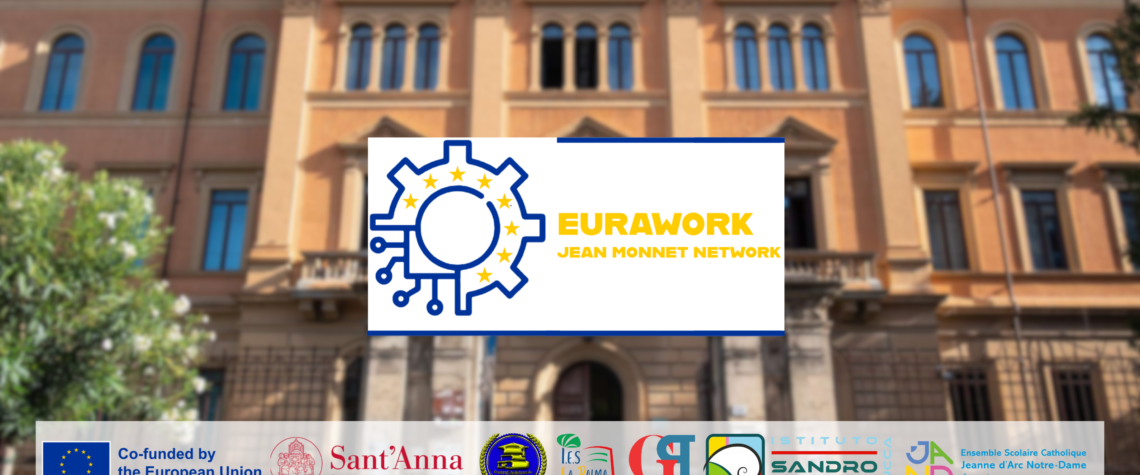
Our school is located in Pisa, very close to the central railway station, so it is very much part of the life of the city centre.
What makes our institution particularly interesting is that it brings together two different educational pathways. One is the Liceo Classico, where students focus on classical subjects such as Latin, Ancient Greek, philosophy and art history. These disciplines naturally encourage reflection on ethics, human values and the philosophical implications of technological change. The other is the technical school, where students study subjects such as economics, business, marketing and information technology. As a result, we have two rather different approaches to artificial intelligence within the same institution.
Students following the classical curriculum tend to be particularly interested in the philosophical and ethical questions surrounding AI, while those attending the technical school often approach it from a more practical perspective, exploring how it can improve efficiency and be applied in professional contexts.
This diversity makes the project especially relevant to our school.