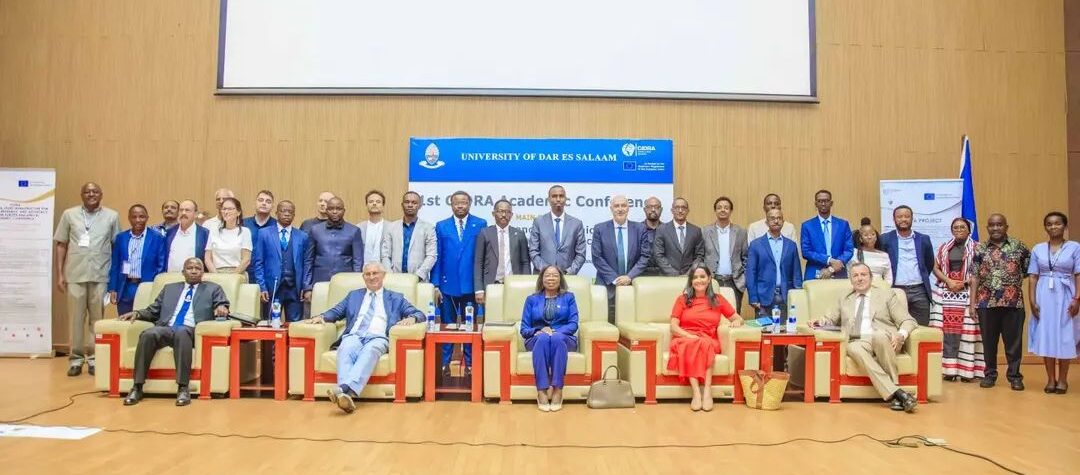
A major step forward in Europe–Africa cooperation on energy, transport and governance has taken place in Dar es Salaam, where the first international conference of the CIDRA network has just concluded. Held on 15–16 April 2026 at the University of Dar es Salaam, the event brought together a high-level and diverse community of academics, policymakers, institutional representatives and international experts, confirming its role as a new reference platform for transregional dialogue.
The conference unfolded in a global context marked by increasing geopolitical uncertainty, pressure on energy systems and growing fragmentation of international governance. Disruptions to supply chains, instability affecting key transit routes and rising competition over resources are reshaping the way both Europe and Africa approach cooperation. In this scenario, the need for structured, forward-looking partnerships has become more urgent than ever.
Against this backdrop, the CIDRA conference stood out for both its scale and ambition. The programme featured high-level plenary sessions involving representatives from European and African institutions, including a central discussion on cooperation between the European Union and African regional economic communities, alongside contributions from diplomatic actors and international organisations. The opening session, attended by government representatives, set the tone for a conference aimed at aligning strategic priorities across continents.
Over two days, the event hosted an extensive range of thematic sessions covering key policy areas such as sustainable development financing, regional integration, digital and green transitions, migration and governance systems. The breadth of topics—ranging from energy market integration and transport infrastructure to artificial intelligence, multilateralism and economic resilience—reflected the complexity of the challenges at stake and the interdisciplinary nature of the CIDRA initiative.
Particularly significant was the strong focus on global crises and geopolitical transformation, with dedicated sessions addressing the role of regionalism in managing instability, the evolution of multilateral frameworks and the impact of shifting global dynamics on Europe–Africa relations. These discussions highlighted the urgency of moving beyond fragmented approaches and reinforced the importance of coordinated strategies at regional and transregional level.
The CIDRA network distinguishes itself through its emphasis on multilevel governance and the role of regional organisations, positioning itself as a platform capable of going beyond traditional bilateral frameworks. By fostering dialogue between academia and policymaking, the initiative aims to produce concrete, policy-relevant outcomes that can support decision-makers on both continents.
As the conference concludes, it leaves behind more than an exchange of ideas: it lays the groundwork for a structured and lasting framework of cooperation. The announcement of a follow-up conference in Addis Ababa, scheduled for November as part of CIDRA’s ongoing programme of academic meetings, further reinforces the network’s commitment to continuity, consolidation and long-term expansion.